

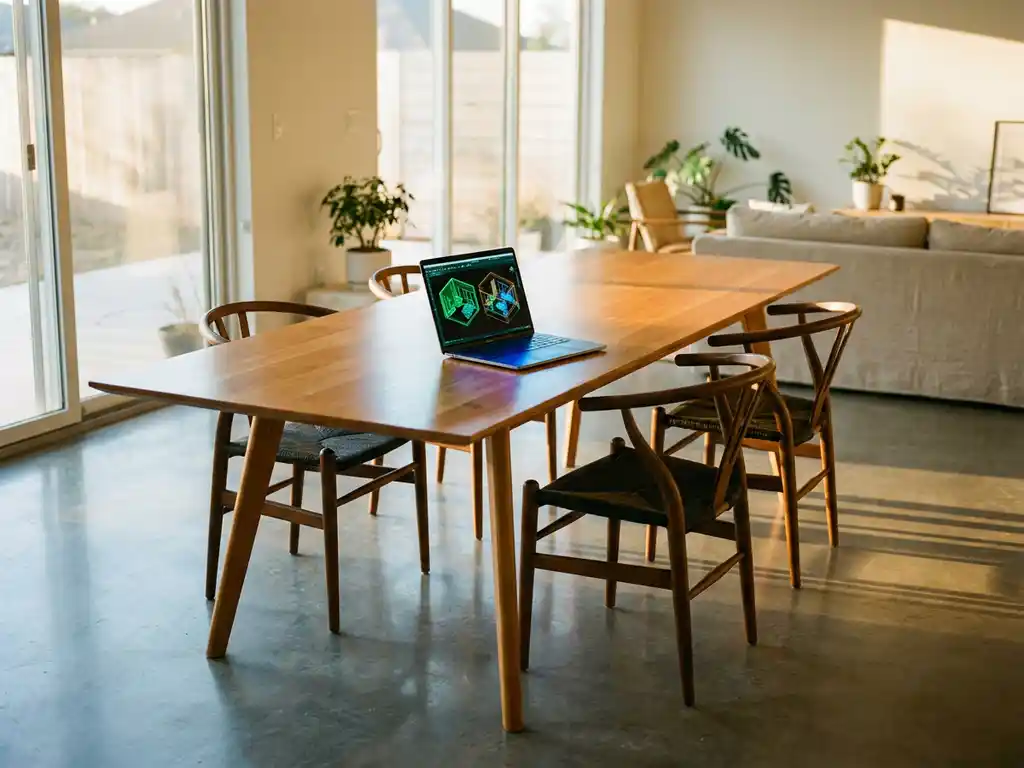
Yes, furniture manufacturers should invest in room planning software, as it significantly increases customer engagement, reduces returns, and boosts sales conversions. Research shows that visualizing products in realistic room settings can increase buying intent by up to 64%, making room planning software a valuable investment for manufacturers looking to enhance their digital sales experience and compete effectively in today’s market.
What is room planning software for furniture manufacturers?
Room planning software is a digital tool that allows customers to design and visualize furniture layouts in realistic 3D room environments. It enables users to place, arrange, and configure furniture pieces within virtual spaces, seeing how different products work together before making purchase decisions.
This software typically includes features for creating floor plans, placing furniture items, adjusting room dimensions, and viewing designs from multiple angles. Advanced versions offer product configuration capabilities, allowing customers to change colors, materials, and specifications while seeing real-time updates in the room visualization.
For furniture manufacturers, room planning software serves as both a sales tool and customer service enhancement. It reduces the need for extensive physical showrooms while providing customers with a more comprehensive view of product possibilities than traditional catalogs or individual product images can offer.
Why do furniture customers want room planning tools?
Customers want room planning tools because they eliminate guesswork from furniture purchases and provide confidence that pieces will work in their actual living spaces. These tools address the common fear of buying furniture that doesn’t fit properly or look right once delivered.
Room planning software helps customers visualize scale relationships, ensuring a sofa isn’t too large for their living room or a dining table fits comfortably in their space. Customers can experiment with different arrangements, test color combinations, and see how new purchases complement existing furniture.
The interactive nature of these tools makes furniture shopping more engaging and enjoyable. Instead of trying to imagine how products might look, customers can actively design their spaces, leading to more thoughtful purchasing decisions and greater satisfaction with their choices.
How does room planning software impact furniture sales?
Room planning software typically increases conversion rates by 20-40% and reduces return rates by helping customers make more informed purchasing decisions. It also increases average order values as customers feel confident buying multiple coordinated pieces rather than single items.
The software addresses major barriers to online furniture purchasing, particularly the inability to see products in context. When customers can visualize how furniture looks in realistic room settings, they move from browsing to buying more quickly. The tool also reduces the sales cycle by answering common customer questions about fit, style coordination, and spatial relationships before they arise.
Beyond direct sales metrics, room planning software improves customer satisfaction and reduces support inquiries. Customers who use these tools before purchasing report higher satisfaction rates and are less likely to return items due to size or style mismatches.
What’s the difference between basic and advanced room planning features?
Basic room planning features include simple drag-and-drop furniture placement, preset room templates, and basic 2D or simple 3D viewing. Advanced features offer real-time product configuration, photorealistic rendering, augmented reality capabilities, and integration with pricing and inventory systems.
Basic tools typically work with fixed furniture models in standard configurations. Users can move pieces around rooms but cannot modify colors, materials, or dimensions. These tools work well for simple layout planning but lack the customization capabilities that drive higher-value sales.
Advanced room planning software allows customers to configure products on the spot, seeing immediate visual updates as they change specifications. These systems often include environmental controls like lighting adjustments, wall colors, and flooring options. Integration with business systems means customers see accurate pricing and availability information for their specific configurations, enabling immediate purchase decisions.
How much does room planning software cost for furniture manufacturers?
Room planning software costs vary significantly based on features and implementation complexity, typically ranging from $10,000 to $100,000+ annually for enterprise solutions. Pricing depends on the number of products, level of customization, integration requirements, and user volume.
Basic solutions with limited customization and simple integration start around $10,000-25,000 annually. Mid-tier options with moderate customization and standard integrations typically cost $25,000-60,000 per year. Enterprise solutions with full product configuration, advanced rendering, and extensive system integration can exceed $100,000 annually.
Implementation costs add to the total investment, including 3D model creation, system integration, and staff training. However, manufacturers often see return on investment within 12-18 months through increased sales, reduced returns, and decreased reliance on physical showroom space.
Should small furniture manufacturers invest in room planning technology?
Small furniture manufacturers should carefully evaluate room planning technology based on their product complexity, customer base, and growth goals. Those selling configurable products or targeting online sales channels typically see strong returns on investment despite smaller budgets.
Small manufacturers with limited product lines might start with simpler solutions that offer core room planning functionality without extensive customization features. This approach provides customer benefits while keeping costs manageable during initial implementation.
The key consideration is whether the technology aligns with business strategy. Small manufacturers focusing on unique, customizable products or direct-to-consumer sales often benefit more from room planning tools than those primarily serving wholesale markets with standard product lines. Exploring different implementation approaches can help determine the right fit for specific business needs.
How iONE360 helps with room planning software implementation
We provide comprehensive room planning solutions specifically designed for furniture manufacturers, combining advanced 3D visualization with seamless product configuration capabilities. Our platform addresses the unique challenges furniture businesses face when implementing room planning technology.
Key benefits of our approach include:
- Integration with existing business systems for real-time pricing and inventory
- Advanced product configuration within room environments
- Photorealistic rendering that showcases products accurately
- Scalable solutions that grow with your business needs
- Proven expertise from 45+ years in furniture industry software development
Our room planning software transforms how customers interact with your products, leading to increased sales and reduced returns. Ready to see how room planning can impact your business? Contact us to schedule a demonstration and discuss your specific requirements.
Frequently Asked Questions
How long does it typically take to implement room planning software for a furniture manufacturer?
Implementation typically takes 3-6 months depending on product catalog size and integration complexity. This includes 3D model creation, system integration, staff training, and testing phases. Manufacturers with extensive product lines or complex configurations may require longer implementation periods, while those with streamlined catalogs can often go live faster.
What technical requirements do customers need to use room planning software effectively?
Most modern room planning software runs on standard web browsers without requiring special downloads or high-end hardware. Customers need a stable internet connection and a device with basic 3D graphics capabilities – typically any computer, tablet, or smartphone from the last 5 years. Mobile optimization ensures the tools work well across all devices.
How do you handle product updates and new inventory in room planning software?
Quality room planning solutions integrate directly with your existing inventory and product management systems, automatically updating availability and pricing in real-time. When you add new products or discontinue items, the changes reflect immediately in the planning tool. This integration eliminates manual updates and ensures customers always see current information.
What's the biggest mistake furniture manufacturers make when choosing room planning software?
The biggest mistake is choosing software that doesn’t integrate with existing business systems, creating data silos and manual work. Manufacturers often focus only on visual features while overlooking integration capabilities, leading to pricing inconsistencies and inventory management problems. Always prioritize solutions that connect seamlessly with your current ERP, CRM, and e-commerce platforms.
How do you measure the ROI of room planning software investment?
Track key metrics including conversion rate increases, average order value growth, return rate reductions, and customer engagement time. Most manufacturers see 20-40% conversion improvements and 15-30% decreases in returns within the first year. Also monitor customer satisfaction scores and support ticket reductions, as these indicate improved purchase confidence and reduced post-sale issues.
Can room planning software work for custom or made-to-order furniture manufacturers?
Yes, advanced room planning software excels with custom furniture by allowing real-time configuration of dimensions, materials, and finishes within room environments. Customers can adjust specifications and immediately see visual and pricing updates, making it ideal for manufacturers offering customization. This capability often leads to higher-value orders as customers feel confident in their custom choices.
What happens if customers create room designs but don't complete their purchases?
Most room planning platforms capture customer designs and contact information, enabling follow-up marketing campaigns with personalized content featuring their specific room layouts. You can send targeted emails showing their saved designs with special offers or new product suggestions that complement their planned spaces, converting abandoned designs into future sales opportunities.