

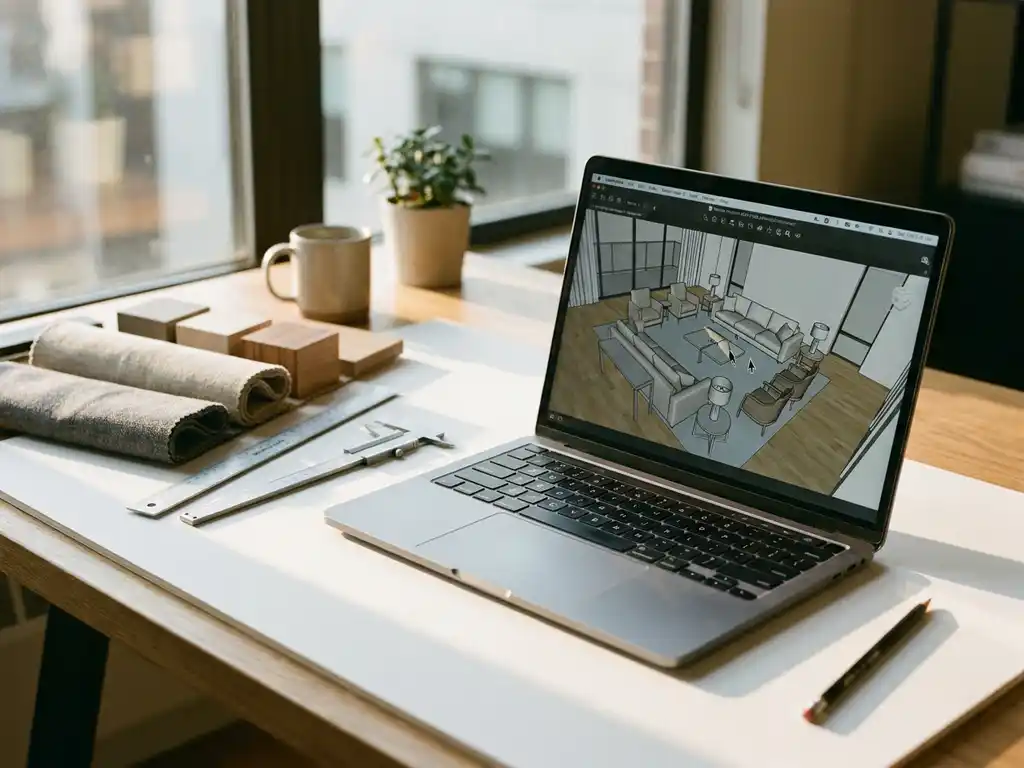
Room planning software should include high-quality 3D visualization, comprehensive furniture libraries, precise measurement tools, seamless system integration, and intuitive user interfaces. Essential features include real-time rendering, configurable product options, accurate scaling capabilities, and cross-platform compatibility to support both customer engagement and sales team efficiency.
What is a 3D room planner and why do you need one?
A 3D room planner is interactive software that allows customers to design and visualize living spaces using realistic three-dimensional models. It enables users to place furniture, adjust layouts, and see how products work together before making purchasing decisions.
Modern consumers expect to visualize products in context before buying, especially for significant purchases like furniture and home decor. Research shows that showing products in the right environment increases buying intent by up to 64%. Room planners eliminate the guesswork by allowing customers to experiment with different arrangements and see exactly how items will look in their actual space.
For businesses, 3D room planning software transforms the sales process by reducing uncertainty, enabling real-time customization, and providing confidence-building visualizations. This technology particularly benefits furniture retailers, interior designers, and home improvement companies by increasing conversion rates, reducing returns, and supporting higher-value orders through effective cross-selling.
What visualization quality should you expect from room planning software?
Professional room planning software should deliver photorealistic 3D visualizations with accurate lighting, realistic textures, and proper shadows. The rendering quality should be indistinguishable from high-end product photography while maintaining fast loading times and smooth interaction.
Quality visualization includes several technical requirements. Materials should display accurate colors, finishes, and reflective properties. Lighting should respond realistically to different times of day and room orientations. Shadows should fall naturally based on light sources and object placement. The software should support high-resolution output suitable for both web display and print materials.
Performance matters equally with visual quality. The best room planning software balances stunning visuals with responsive interaction, allowing customers to rotate views, zoom details, and modify layouts without frustrating delays. Look for platforms that use optimized rendering engines and offer multiple quality settings to accommodate different device capabilities and network speeds.
How important is the furniture library in a 3D room planner?
The furniture library is critical to room planner success, as it determines what products customers can visualize and purchase. A comprehensive library with accurate product representations, configurable options, and regular updates directly impacts sales effectiveness and customer satisfaction.
Your furniture library should include your complete product catalog with all available configurations, colors, and finishes. Each item needs accurate dimensions, realistic materials, and proper scaling to ensure customers see exactly what they will receive. The library should support product variants without requiring separate models for each option.
Integration capabilities matter significantly for library management. The best room planning software connects directly to your product information management system, automatically updating prices, availability, and specifications. This connection ensures customers always see current information and can move seamlessly from visualization to purchase without manual data entry or synchronization delays.
What measurement and scaling features are essential?
Essential measurement features include accurate room dimensioning, precise furniture scaling, and real-world measurement tools. The software should maintain proper proportions, display measurements in multiple units, and validate that furniture fits within specified spaces.
Room planners must handle real-world dimensions accurately. Customers should input room measurements easily, either by manual entry or by uploading floor plans. The software should validate dimensions and warn when furniture selections exceed available space. Measurement tools should allow customers to check distances between objects and verify clearances for doors and walkways.
Scaling accuracy extends beyond basic dimensions to include proportional relationships between objects. A sofa should look appropriately sized next to a coffee table, and ceiling heights should affect the visual impact of tall furniture pieces. Advanced measurement features include automatic furniture arrangement suggestions based on room dimensions and ergonomic spacing recommendations for optimal layouts.
How should a 3D room planner integrate with existing business systems?
Effective room planning software integrates seamlessly with product information management systems, e-commerce platforms, and customer relationship management tools. Integration should be API-driven, real-time, and require minimal manual intervention to maintain data accuracy.
Critical integration points include your product catalog, pricing engine, and inventory management system. The room planner should pull current product information, display accurate pricing for configured items, and check availability before customers complete purchases. Order processing integration allows customers to buy directly from their room designs without recreating their selections.
Customer data integration enhances the planning experience by saving designs, tracking preferences, and enabling follow-up communications. The software should connect with your CRM system to capture leads, monitor engagement, and support sales team follow-up. Advanced integrations include connections to manufacturing systems for custom orders and shipping calculators for delivery planning.
What user experience features make room planners effective for sales?
Effective sales-focused room planners feature intuitive drag-and-drop interfaces, guided design workflows, and seamless purchase integration. The software should minimize learning curves while maximizing engagement through interactive features and clear path-to-purchase functionality.
User interface design significantly impacts conversion rates. The best room planners use familiar interaction patterns, clear visual feedback, and logical tool organization. Customers should accomplish basic tasks like adding furniture and changing colors without tutorials or help documentation. Mobile responsiveness ensures consistent experiences across devices.
Sales-supporting features include wish list functionality, design sharing capabilities, and integrated pricing displays. Customers should save multiple design options, share layouts with family members for approval, and see real-time pricing as they modify selections. The software should guide customers naturally from exploration to configuration to purchase without interrupting their creative flow.
How does iONE360 help with room planning software?
We deliver comprehensive room planning solutions that address every requirement outlined above through our advanced visual commerce platform. Our room planning software combines photorealistic 3D visualization with seamless business system integration, supporting both customer engagement and sales team efficiency.
Key advantages of our room planning software include:
- Photorealistic 3D visualization with accurate lighting and materials
- Complete product configurability within the room planning environment
- Real-time pricing and availability integration
- Seamless connection to existing PIM, ERP, and e-commerce systems
- Mobile-responsive design for cross-platform accessibility
- White-label customization to match your brand identity
Built on over 45 years of furniture industry expertise, our platform transforms how customers design and purchase furniture while providing measurable improvements in conversion rates and order values. Ready to see how our room planning software can enhance your sales process? Explore our showcases to see the technology in action or contact us to discuss your specific requirements.
Frequently Asked Questions
How long does it typically take to implement room planning software into an existing e-commerce platform?
Implementation timeframes vary based on integration complexity, but most businesses can deploy room planning software within 2-6 weeks. Simple API integrations with existing product catalogs may take just a few days, while comprehensive implementations including custom branding, advanced integrations, and staff training typically require 4-6 weeks. The key is having clean product data and clear integration requirements defined upfront.
What are the most common mistakes businesses make when choosing room planning software?
The biggest mistake is prioritizing price over functionality and integration capabilities. Many businesses also underestimate the importance of mobile responsiveness and fail to consider how the software will scale with their product catalog growth. Another common error is not testing the software with their actual customer base before full deployment, leading to user experience issues that could have been identified early.
How much technical expertise is required to manage room planning software day-to-day?
Modern room planning platforms are designed for non-technical users to handle daily operations like updating product catalogs, adjusting pricing, and managing customer designs. However, you’ll need basic technical support for initial API integrations and periodic system updates. Most businesses find that existing e-commerce or marketing team members can manage the platform effectively after initial training.
Can room planning software handle custom or made-to-order furniture products?
Yes, advanced room planning software supports configurable products with custom dimensions, materials, and finishes. The software should connect to your manufacturing systems to validate custom specifications and provide accurate pricing for non-standard items. Look for platforms that can handle parametric product models that adjust automatically based on customer selections while maintaining realistic visualizations.
What kind of return on investment can businesses expect from implementing room planning software?
Most businesses see measurable improvements within 3-6 months, including 15-30% increases in conversion rates, 20-40% higher average order values through cross-selling, and 10-25% reductions in product returns. The exact ROI depends on your current conversion rates, product margins, and customer engagement levels. Businesses with complex or high-value products typically see the strongest returns.
How do you ensure room planning software performs well on mobile devices?
Choose platforms built with responsive design principles that automatically optimize for different screen sizes and touch interfaces. The software should maintain full functionality on mobile while adapting interaction methods for smaller screens. Test performance on various devices and network speeds, and ensure critical features like product selection and room navigation work smoothly without requiring app downloads.
What happens to customer designs if they don't complete their purchase immediately?
Professional room planning software should save customer designs automatically and provide easy retrieval options through email links, customer accounts, or shareable URLs. This allows customers to return to their designs later, share them with others for approval, and enables your sales team to follow up on incomplete purchases. The software should also track design engagement to identify high-intent prospects for targeted outreach.