

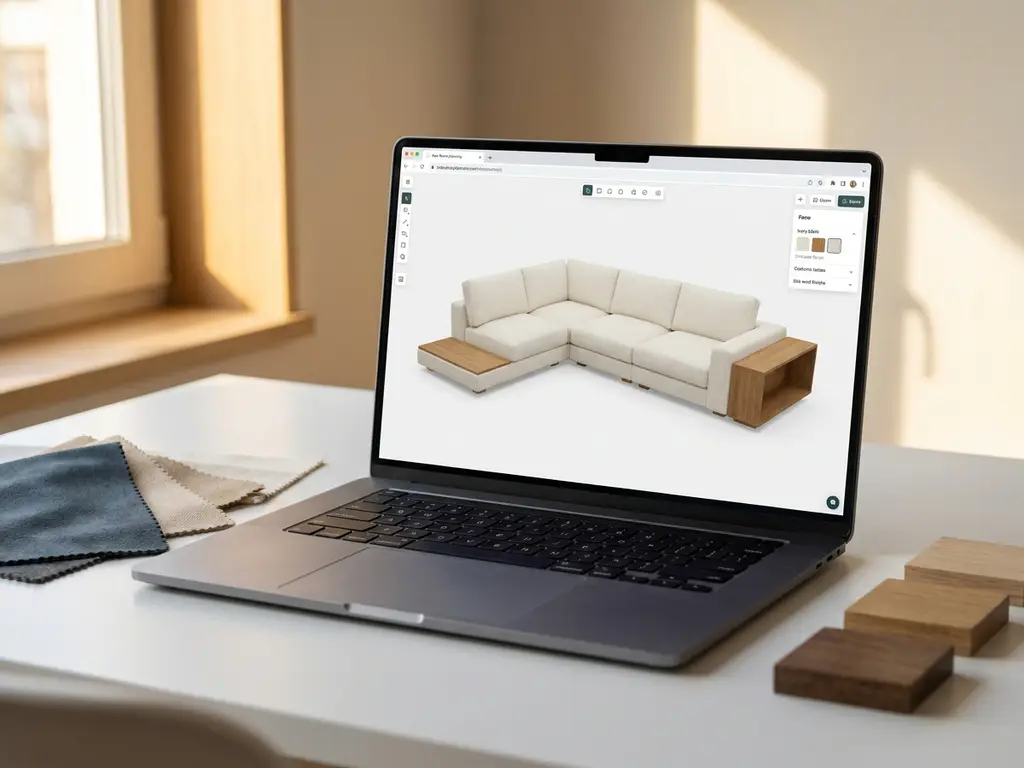
CPQ (Configure, Price, Quote) has largely been replaced by visual product configurators and modern commerce platforms that combine configuration logic with real-time 3D visualisation, pricing, and guided selling in a single, customer-facing experience. The shift happened because CPQ was built for sales teams, not for the end customer, and today’s buyers expect to configure products themselves before they ever speak to a salesperson. The sections below unpack why this change happened, what the alternatives look like, and how to choose the right solution for your business.
Why are companies moving away from CPQ?
Companies are moving away from CPQ because the technology was designed for internal sales processes, not for the modern buying journey. CPQ tools help sales reps generate quotes for complex products, but they typically lack visual output, require specialist training to operate, and sit entirely behind the scenes, invisible to the customer who actually needs to understand what they are buying.
Several factors are accelerating this shift. First, buyer expectations have changed. Customers in both B2C and B2B contexts now expect to explore, configure, and visualise products independently, often before contacting a sales team at all. A text-based quote generated by a back-office tool does not meet that expectation.
Second, CPQ implementations are notoriously complex and expensive to maintain. Business rules, pricing logic, and product catalogues change frequently, and keeping a CPQ system in sync with those changes demands significant IT resources. Many companies find that the total cost of ownership far exceeds the initial investment.
Third, CPQ does not address the growing need for visual commerce. In industries like furniture, home furnishings, and interior decoration, the ability to show a product in a specific fabric, colour, or configuration is not a nice-to-have. It is a core part of the sales process. CPQ cannot deliver that.
What technologies have replaced CPQ in modern sales?
Modern sales teams have replaced CPQ with visual product configurators, guided selling platforms, and integrated commerce solutions that combine configuration logic, real-time pricing, and immersive product visualisation in one tool. These platforms serve both the customer and the sales team simultaneously, rather than treating them as separate audiences.
The most significant replacements include:
- Visual product configurators: Web-based tools that let customers build and visualise their product in real time, selecting options like materials, dimensions, and finishes while seeing the result rendered in 3D.
- 3D commerce platforms: Broader platforms that combine product configuration with augmented reality (AR), space planning, and automated image generation, covering the full visual sales journey.
- Headless commerce integrations: API-first configuration engines that plug into existing webshops, PIM systems, and ERP environments, making the configurator a seamless part of the existing tech stack rather than a standalone tool.
- Guided selling tools: Simplified step-by-step interfaces that walk customers or sales reps through complex product choices without requiring them to understand the underlying business rules.
In product categories where physical appearance matters, such as furniture, kitchens, and home accessories, visual configurators have become the dominant replacement because they address both the commercial need (accurate pricing and ordering) and the experiential need (confidence in what the product will look like).
What is the difference between a visual configurator and CPQ?
The core difference between a visual configurator and CPQ is their primary audience and purpose. CPQ is an internal sales tool that automates quoting for complex products. A visual configurator is a customer-facing experience that lets buyers build, visualise, and validate their product choices before purchasing. One generates documents; the other generates confidence.
More specifically, the differences break down across several dimensions:
- User: CPQ is used by sales representatives. A visual configurator is used by the end customer, either directly on a website or guided by a sales advisor in-store.
- Output: CPQ produces a quote document. A visual configurator produces a rendered image, a configuration summary, and a validated order that feeds directly into the sales process.
- Visual capability: CPQ has little to no visual output. Visual configurators render products in real time using 3D models, with options for AR and room planning.
- Complexity handling: Both tools can handle complex business rules and pricing logic, but visual configurators surface that complexity in a way that guides the customer rather than overwhelming them.
- Integration: Modern visual configurators connect to ERP, PIM, and e-commerce systems in the same way CPQ does, so the operational back-end benefits are preserved.
For many businesses, particularly in the home furnishings sector, a visual configurator effectively makes CPQ redundant because it handles the pricing and configuration logic while also delivering the customer experience that CPQ was never designed to provide.
How does a 3D product configurator handle complex product rules?
A 3D product configurator handles complex product rules by embedding business logic directly into the configuration engine, so that only valid combinations are ever presented to the user. This means the customer cannot accidentally select incompatible options, and the pricing updates automatically based on the choices made, all without the customer needing to understand the rules behind the scenes.
In practice, this works through a rules engine that mirrors the logic already present in the company’s ERP or product management system. When a customer selects a sofa in a particular frame size, for example, the configurator automatically filters the available fabric options to those compatible with that frame, hides unavailable combinations, and recalculates the price in real time.
For manufacturers with highly complex catalogues, this can mean managing thousands or even millions of valid product combinations from a single platform. The sophistication of the rules engine is what separates a basic online product configurator from an enterprise-grade solution. A robust platform will support:
- Conditional logic (if option A is selected, option B becomes available or unavailable)
- Pricing rules tied to specific configurations, materials, or dimensions
- Dependency chains across multiple product components
- Real-time validation to prevent invalid orders from reaching the production floor
The result is that the complexity is handled invisibly. From the customer’s perspective, they are simply making choices. From the manufacturer’s perspective, every order that comes through is technically valid and production-ready.
When should a business still consider CPQ over a visual configurator?
A business should still consider CPQ over a visual configurator when the sales process is entirely relationship-driven, the product has no meaningful visual component, and the primary need is to automate quote generation for a sales team rather than to create a self-service buying experience for customers.
CPQ remains a reasonable choice in scenarios such as:
- Pure B2B enterprise sales: Where deals are negotiated between sales teams and procurement departments, and no customer-facing configuration experience is needed.
- Non-visual products: Software licences, financial products, or service contracts where there is nothing to render and the value of visualisation is zero.
- Quote-heavy workflows: Businesses that generate high volumes of formal quotes with complex discount structures, approval workflows, and contract terms.
For most product-based businesses, however, and especially those in the furniture, interior, or home decoration sectors, a visual configurator will deliver more value than CPQ because it serves both the customer experience and the back-office process simultaneously. The question is not really CPQ versus visual configurator; it is whether the business needs a customer-facing configuration experience at all.
What should you look for in a CPQ replacement platform?
When evaluating a CPQ replacement, the most important criteria are visual quality, integration depth, scalability across your product catalogue, and the ability to serve both customers and sales teams from a single platform. A replacement that only addresses one of these dimensions will create new gaps even as it closes old ones.
Specifically, look for the following capabilities:
- Real-time 3D visualisation: The platform should render product configurations accurately and instantly, with a level of visual realism that builds customer confidence.
- ERP and PIM integration: Configuration logic and pricing should connect directly to your existing systems so that orders are valid, consistent, and production-ready without manual re-entry.
- Scalability: The platform must handle your full catalogue, including all variants, without requiring manual effort for every new product or configuration.
- Omnichannel deployment: The same configurator should work on your website, in your dealer network, and on tablets in physical showrooms, delivering a consistent brand experience everywhere.
- AR and space planning: For home and interior products, the ability to place items in a real room using augmented reality significantly reduces purchase hesitation and returns.
- Guided selling: A step-by-step interface that simplifies complex choices for customers, reducing configuration errors and support costs.
- Proven industry references: Especially in specialised sectors like furniture, a platform with deep domain expertise will handle edge cases that a generic tool cannot.
Total cost of ownership is also worth scrutinising carefully. A platform that eliminates the need for traditional product photography, reduces returns, and increases average order value can deliver a return on investment that a back-office CPQ tool simply cannot match.
How iONE360 helps businesses replace CPQ with visual configuration
We built iONE360 specifically to address the limitations that push businesses away from CPQ in the first place. Our platform combines a powerful rules engine, real-time 3D rendering, AR, and space planning in a single web-based solution designed for the furniture, home, and interior decoration industry.
Here is what that means in practice:
- Complex business rules, made invisible: iONE360 is built on ERP logic and speaks the same language as enterprise resource planning systems, so even products with millions of valid configurations are presented to customers as a simple, guided step-by-step process.
- No photography dependency: High-quality packshot images are generated automatically from 3D models, eliminating the cost and delay of traditional product photography across every variant in your catalogue.
- Seamless integration: Our platform connects to existing PIM, ERP, CMS, and webshop environments, making it an extension of your current IT landscape rather than a replacement for it.
- Omnichannel consistency: The same configuration experience works on your website, in your dealer network, and in physical showrooms, ensuring your brand is presented consistently everywhere.
- Scalable across your full catalogue: Whether you have hundreds or hundreds of thousands of product variants, iONE360 scales without requiring manual effort per product.
If you are evaluating alternatives to CPQ and want to see how a visual-first approach performs for complex configurable products, we would be glad to show you what iONE360 can do for your specific catalogue and sales process. Get in touch with our team to start the conversation.
Related Articles
- Is there free interior design software?
- When should a business invest in an AI-powered configurator?
- Why is space planning important for retail stores?
- Can a 3D product configurator rotate products so customers see every angle?
- How do 3D product configurators help sell furniture without a physical showroom?