

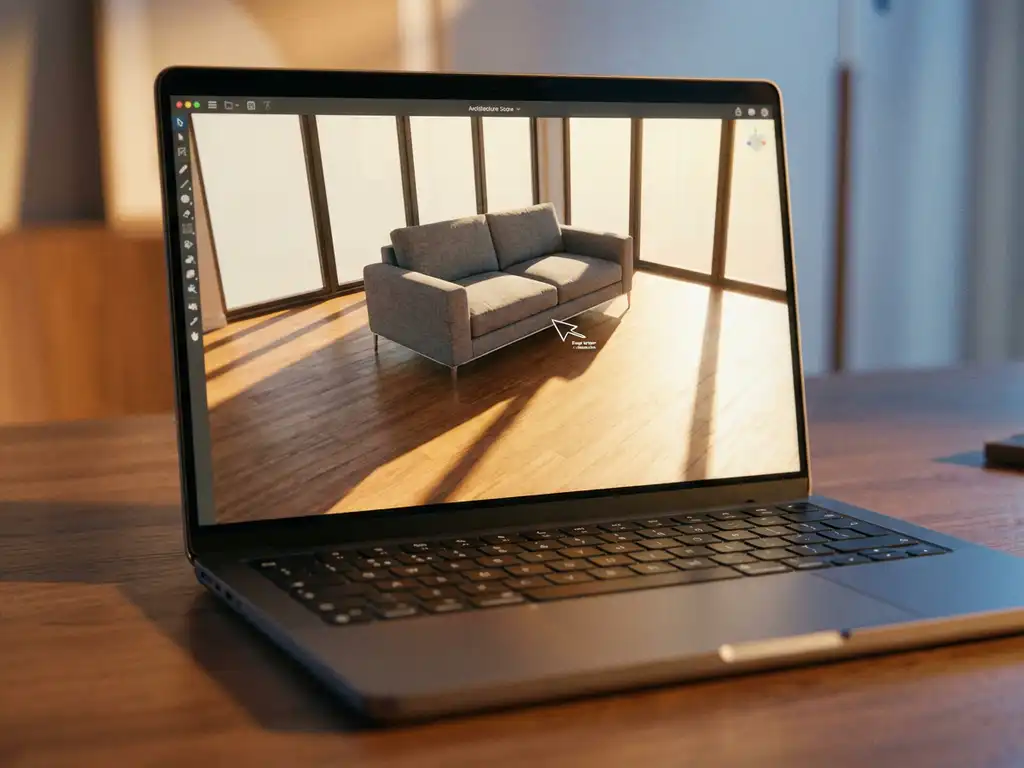
Yes, customers can configure furniture directly within room planning software. Modern 3D room planners integrate product configurators that allow users to customize furniture attributes like materials, colors, dimensions, and finishes while designing their space, creating a seamless experience from planning to purchasing.
What is furniture configuration in room planning software?
Furniture configuration in room planning software is the ability to customize product attributes like size, color, material, and finish directly within a 3D room design environment. This integration allows customers to modify furniture specifications while seeing real-time visual updates in their room layout.
This functionality combines two traditionally separate processes into one seamless workflow. Instead of selecting from static furniture models, customers can adjust configurable parameters and immediately see how their choices affect both the individual piece and the overall room design. The system typically includes complex business rules and pricing logic that automatically update costs as configurations change.
Advanced implementations support millions of possible product variations while maintaining real-time performance. The configuration data integrates with backend systems, ensuring that what customers design can actually be manufactured and delivered according to their specifications.
How does real-time furniture customization work in room planners?
Real-time furniture customization uses 3D rendering engines that instantly update visual representations when customers modify product attributes. The system processes configuration changes through predefined business rules and generates new visualizations within seconds, showing accurate materials, proportions, and styling.
The technical process begins when a customer selects a configurable furniture item in the room planner. The software presents available customization options based on the product’s configuration matrix. As customers make selections, the system applies changes to the 3D model using parametric design principles, adjusting geometry, textures, and materials accordingly.
Behind the scenes, the platform maintains complex relationships between different product attributes. For example, selecting a specific fabric might automatically limit available leg finishes or trigger price adjustments. The system validates each configuration against manufacturing constraints and business rules before rendering the updated visualization in the room context.
What furniture attributes can customers configure in room planning tools?
Customers can typically configure dimensions, materials, colors, finishes, hardware, and styling options directly within room planning tools. The specific attributes depend on the product type and manufacturer’s configuration capabilities, ranging from simple color changes to complex structural modifications.
Common configurable attributes include:
- Dimensions: Width, depth, height, and modular sizing options
- Materials: Wood species, metal types, fabric selections, and leather grades
- Finishes: Stains, paints, textures, and protective coatings
- Hardware: Handles, hinges, legs, and decorative elements
- Functional features: Storage options, mechanisms, and add-on components
More sophisticated systems support complex configurations like modular seating arrangements where customers can adjust the number of seats, corner pieces, and ottomans while seeing how these changes affect the room layout. Some platforms even allow configuration of built-in features like integrated lighting or charging stations.
Which room planning platforms support direct furniture configuration?
Several enterprise-level room planning platforms support direct furniture configuration, including specialized solutions for furniture retailers and manufacturers. These platforms typically require integration with product information management systems and 3D asset libraries to enable real-time customization capabilities.
Professional-grade platforms often provide white-label solutions that furniture companies can customize for their specific product lines and brand requirements. These systems integrate with existing e-commerce platforms, ERP systems, and manufacturing workflows to ensure configured products can be accurately priced, ordered, and produced.
The most effective implementations combine room planning software with comprehensive product configurators, creating unified experiences where customers never leave the design environment. This integration requires sophisticated backend systems that can handle complex product rules, pricing calculations, and real-time 3D rendering.
How accurate are configured furniture visualizations in room planners?
Configured furniture visualizations in quality room planners achieve photorealistic accuracy when built on proper 3D asset libraries and calibrated rendering engines. The accuracy depends on the quality of the underlying 3D models, material definitions, and lighting systems used in the platform.
Professional room planning software uses physically-based rendering techniques that accurately represent how different materials interact with light. This means fabric textures, wood grains, and metal finishes appear as they would in real environments. Color accuracy is maintained through proper color management systems that account for different viewing conditions and display types.
The most accurate systems use actual material samples and photography to create their digital representations. They also account for scale relationships, ensuring that configured furniture appears correctly sized relative to room dimensions and other objects. However, accuracy ultimately depends on the quality of the initial 3D assets and the precision of the configuration rules programmed into the system.
What are the benefits of configuring furniture within room planning software?
Configuring furniture within room planning software increases customer confidence, reduces returns, and boosts conversion rates by eliminating uncertainty about how customized products will look in their actual space. Customers can experiment with different options without commitment while seeing immediate visual feedback.
Key benefits include:
- Reduced decision anxiety: Customers see exactly what they’re buying before purchase
- Higher order values: Easy experimentation encourages upgrades and additional items
- Fewer returns: Accurate visualizations prevent expectation mismatches
- Faster sales cycles: Real-time visualization speeds decision-making
- Better space utilization: Customers can optimize furniture sizing for their rooms
From a business perspective, integrated configuration capabilities reduce the need for extensive physical showrooms and sample libraries. Sales teams can demonstrate unlimited product variations without maintaining physical inventory, while customers gain access to the complete product range regardless of location.
How does iONE360 help with furniture configuration in room planning software?
We provide an advanced room planning platform that seamlessly integrates furniture configuration capabilities, allowing your customers to customize products directly within their 3D room designs. Our solution combines over 45 years of furniture industry expertise with cutting-edge visualization technology to deliver photorealistic results that drive sales.
Key capabilities include:
- Real-time 3D furniture configuration with instant visual updates
- Support for complex product rules and millions of variations
- Photorealistic rendering that accurately represents materials and finishes
- Seamless integration with existing PIM, ERP, and e-commerce systems
- White-label solutions customizable to your brand requirements
Our platform transforms the traditional furniture buying experience by eliminating uncertainty and enabling confident decision-making. Ready to see how integrated room planning and product configuration can boost your sales? Explore our showcases or contact us for a personalized demonstration.
Frequently Asked Questions
How long does it typically take to implement furniture configuration capabilities in existing room planning software?
Implementation timelines vary from 3-6 months depending on your product catalog complexity and existing system integrations. The process involves setting up 3D assets, configuring business rules, integrating with your PIM/ERP systems, and thorough testing. Companies with well-organized product data and clear configuration requirements can often go live faster, while those with complex custom products may need additional development time.
What happens if a customer configures a furniture piece that can't actually be manufactured?
Quality room planning platforms include built-in validation rules that prevent impossible configurations from being created. The system checks each selection against manufacturing constraints, material compatibility, and business rules in real-time. If a customer attempts an invalid combination, the software either prevents the selection or suggests the closest available alternative, ensuring every configured product can be successfully manufactured and delivered.
Can customers save and share their configured furniture designs with others?
Most professional room planning platforms allow customers to save their complete room designs including all furniture configurations, then share them via links, email, or social media. This feature is particularly valuable for customers who want to get approval from family members or interior designers. Some platforms also enable collaborative editing, allowing multiple people to modify the same design project.
How do pricing updates work when customers change furniture configurations in real-time?
Advanced room planning software integrates with your pricing engine to calculate costs automatically as customers modify configurations. Price changes appear instantly on screen, showing both individual item costs and total project pricing. The system accounts for material upgrades, size premiums, and any applicable discounts or promotions, ensuring customers always see accurate pricing before adding items to their cart.
What's the best way to handle complex modular furniture systems like sectional sofas in room planners?
Modular furniture requires specialized configuration logic that understands component relationships and spatial constraints. The best approach is to implement smart assembly rules that automatically suggest compatible pieces and prevent impossible combinations. Customers should be able to add, remove, or rearrange modules while the system validates fit and updates pricing, with visual feedback showing how each change affects the overall piece and room layout.
Do customers need special hardware or software to use furniture configuration features?
Modern room planning platforms run entirely in web browsers using WebGL technology, requiring no special downloads or plugins. Customers can access full configuration capabilities on desktop computers, tablets, and smartphones with standard internet browsers. However, complex 3D rendering performs best on devices with dedicated graphics cards and sufficient processing power for smooth real-time visualization.
How can furniture retailers measure the ROI of implementing integrated room planning and configuration tools?
Key metrics include conversion rate improvements (typically 15-40% increases), average order value growth from configuration upsells, reduced return rates due to better visualization, and decreased sales cycle length. Track customer engagement metrics like time spent in the configurator, number of variations explored, and project save rates. Most retailers see positive ROI within 6-12 months through increased sales and reduced operational costs from fewer showroom requirements.