

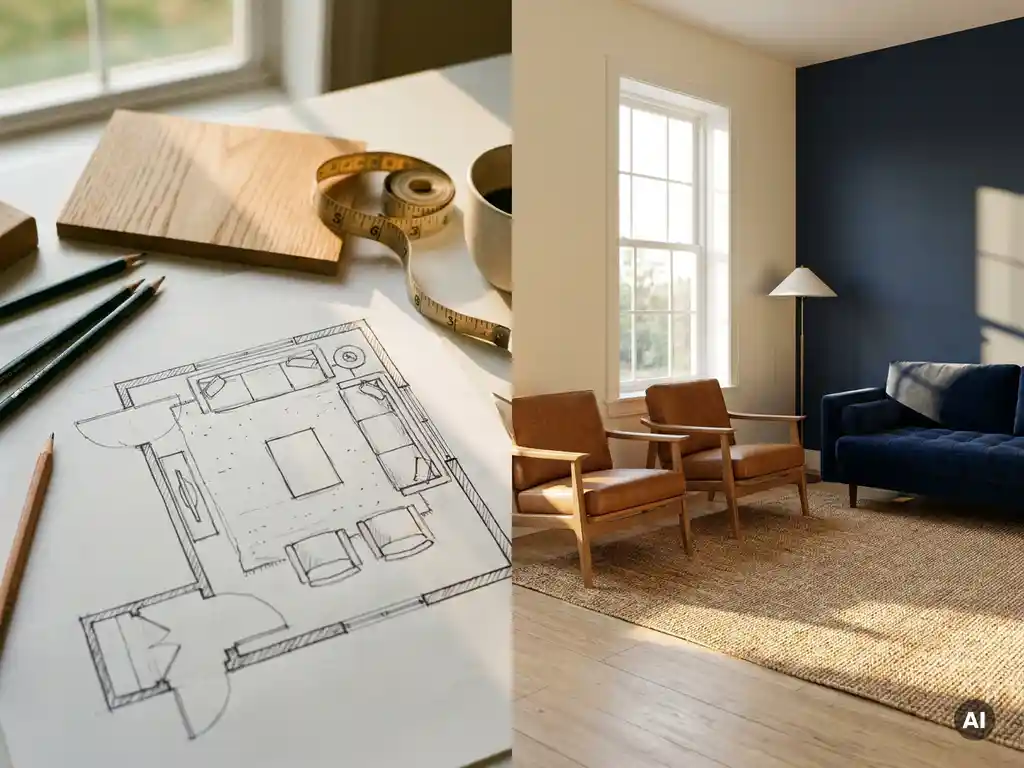
A furniture brand should add room planning software to its platform when customers regularly need to coordinate multiple pieces, visualise spatial fit, or configure complex products before committing to a purchase. This is not a tool for every stage of a brand’s digital journey; it delivers the most value when a solid product catalogue, clear customer intent signals, and the right ecommerce infrastructure are already in place. The questions below break down exactly when and how room planning software creates measurable impact.
What does room planning software actually do for furniture brands?
Room planning software gives customers a digital environment where they can arrange furniture, experiment with layouts, and visualise how individual pieces work together in a real room context. For furniture brands, this translates into a sales tool that reduces purchase hesitation, increases basket size, and builds buyer confidence before a single item ships.
At its core, a room planner lets users create floor plans, drag and drop furniture into position, zoom and rotate the scene, and see how colours, fabrics, and dimensions interact within a space. More advanced solutions go further, allowing customers to configure individual products on the spot, add flooring, wallpaper, curtains, and view the entire scene in photorealistic 3D.
For brands, the commercial case is straightforward. Showing products in context, rather than isolated against a white background, increases buying intent significantly. When a customer can see their chosen sofa next to a coffee table and a rug in a room that resembles their own home, the emotional connection to the purchase grows, and the likelihood of completing the order rises with it.
What signals indicate a furniture brand is ready for a room planner?
A furniture brand is ready for room planning software when customers are already browsing multiple product categories, average order values include more than one item, and the sales team regularly answers questions about spatial fit or product combinations. These are signs that the buying journey needs a visual coordination tool.
Look for these specific readiness signals:
- Customers frequently ask whether a sofa fits a room or whether two pieces work together visually
- The product catalogue spans multiple categories – seating, storage, tables, accessories – that customers naturally combine
- Online conversion rates are lower than in-store, suggesting customers lack the spatial confidence to buy digitally
- Return rates are driven by size or style mismatch rather than product quality issues
- The brand already has 3D product data or is investing in it for other visual commerce purposes
- Competitors or retail partners are offering room planning experiences that are raising customer expectations
Brands that tick three or more of these boxes are not just ready; they are likely leaving revenue on the table by not offering a room planning experience yet.
How does room planning software affect conversion rates and order value?
Room planning software improves conversion rates by removing the spatial uncertainty that causes customers to abandon a purchase, and it increases order value by naturally surfacing complementary products within the same planning session. Both effects compound: a customer who plans a full room buys more items and does so with greater confidence.
The mechanism is well understood in retail psychology. When a customer can see exactly how a dining table, chairs, and sideboard fit together in a room that mirrors their own space, the mental leap from browsing to buying becomes much smaller. Uncertainty about fit – will this sofa be too big? does this colour work with my floor? – is one of the most common reasons furniture purchases stall online.
Room planners also extend session time. A customer who engages with a planning tool spends longer on site, interacts with more products, and is more likely to return to complete a purchase. When the planner is connected to a 3D room planning tool that also handles product configuration, pricing, and direct ordering, the path from inspiration to checkout becomes seamless, and the average basket grows accordingly.
Should a furniture brand launch a room planner before or after a product configurator?
A furniture brand should implement a product configurator before a room planner. The configurator handles individual product customisation – fabric, colour, size, finish – and generates the accurate 3D product data that a room planner depends on to function effectively. Launching a room planner without that foundation limits its usefulness significantly.
Think of the two tools as layers. The product configurator builds the foundation: it ensures every product variant is visually represented, priced correctly, and available in 3D. The room planner sits on top of that foundation, allowing customers to combine those configured products into a coherent spatial vision.
A room planner populated with static, non-configurable products can still add value, but it misses the most powerful use case. When a customer can configure a sofa in their preferred fabric, place it in a room scene, and see how it looks alongside a coffee table they have also customised, the experience becomes genuinely differentiated. That level of interactivity requires the configurator layer to already be in place.
The practical sequencing for most furniture brands looks like this:
- Build or migrate 3D product assets for the core catalogue
- Implement a product configurator to handle variants, rules, and pricing
- Integrate room planning software once the configurator is stable and the product library is populated
- Connect the room planner to the ecommerce checkout so configured products can be ordered directly from the planning session
What types of furniture products benefit most from room planning tools?
Products that are large, spatially dominant, or typically purchased as part of a coordinated set benefit most from room planning software. This includes sofas and seating groups, dining sets, bedroom furniture, and modular storage systems – any category where customers need to understand how multiple pieces relate to each other and to the room itself.
Modular and configurable products are particularly strong candidates. A modular sofa with multiple seating elements, a wardrobe system with interchangeable components, or a dining collection with several table sizes and chair options all benefit from a spatial planning environment where combinations can be tested visually before ordering.
Smaller accessories – cushions, lamps, decorative items – benefit less as standalone products but become highly relevant inside a room planning session as add-ons. A customer planning a living room who can drop in a rug, a floor lamp, and a side table alongside a sofa is far more likely to add those items to their order than if they encountered them separately on a product listing page.
How does room planning software integrate with existing ecommerce systems?
Room planning software integrates with existing ecommerce systems through APIs that connect the planning environment to product catalogues, pricing engines, inventory data, and checkout flows. A well-integrated room planner pulls live product data from a PIM or ERP, reflects current pricing and availability, and passes configured orders directly into the ecommerce checkout without requiring the customer to start again.
The integration depth varies by platform and vendor, but the most commercially effective room planning implementations share a few common characteristics. Product data flows in automatically from the brand’s existing systems rather than being maintained separately. Pricing updates in real time as customers configure products within the planner. And the completed room plan, with all selected and configured items, converts into a shareable basket or direct order with a single action.
For brands operating across multiple channels – webshop, dealer network, physical showrooms – a room planner that integrates cleanly with the central tech stack also ensures consistency. A customer who starts planning at home and continues in-store sees the same products, prices, and configurations across every touchpoint.
How iONE360 helps with room planning software
We offer two practical routes into room planning, built on more than 45 years of furniture industry expertise. Whether a brand needs a fully bespoke, white-labeled room planner built to their specifications, or wants to go live faster through HomeDecoHub, our ready-to-use room planning marketplace, we provide the infrastructure, the integration, and the deep furniture-sector knowledge to make it work.
Here is what our room planning solution delivers in practice:
- Full product configuration inside the planner – customers can configure individual furniture items on the spot, see prices and lead times, and order directly from the room scene
- Photorealistic 3D visualisation – rooms are rendered with accurate lighting, materials, and spatial proportions, giving customers a genuine preview of their finished space
- Seamless system integration – our platform connects with PIM, ERP, CMS, and webshop systems so product data, pricing, and inventory stay consistent across every channel
- Scalable across the full catalogue – every product variant, fabric, finish, and size is available inside the planner without manual effort per product
- White-label ready – the room planner carries the brand’s identity, not ours, ensuring a consistent experience for the end customer
If your brand is ready to give customers the spatial confidence to buy, and to increase order value in the process, get in touch with us to discuss the right room planning approach for your catalogue and platform.