

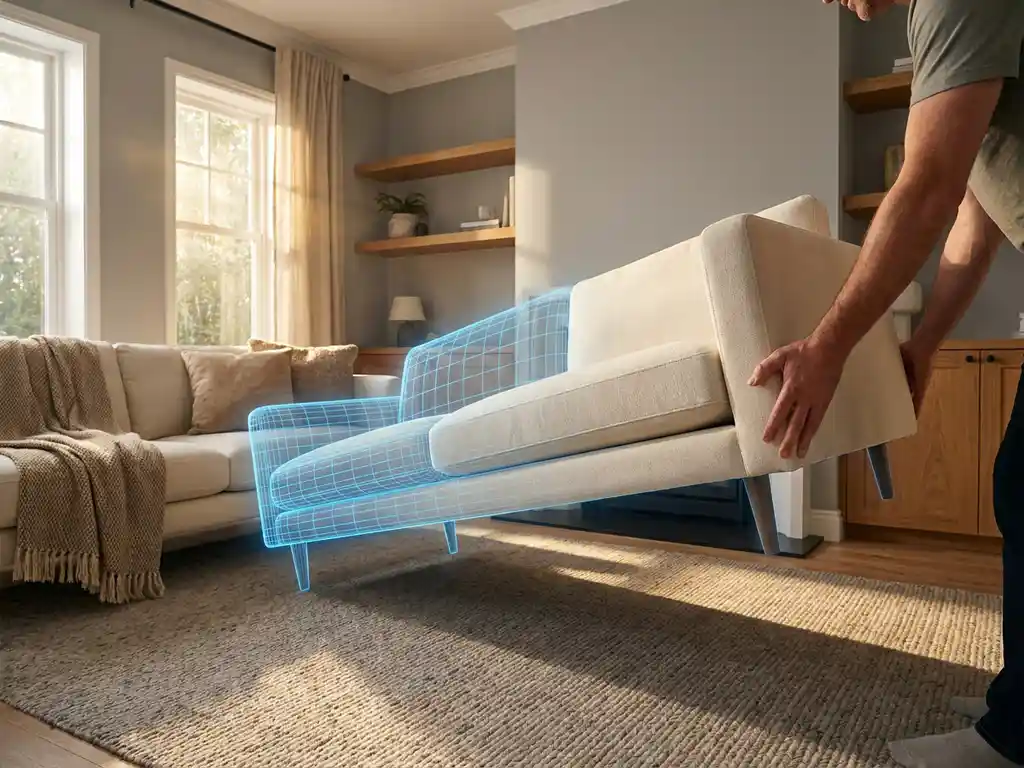
The best way to visualize furniture in a room is through 3D room planning software that combines realistic furniture models with accurate spatial layouts. These platforms allow you to place, configure, and view furniture pieces from multiple angles within virtual room environments, providing photorealistic previews before making purchase decisions.
What is furniture visualization and why is it important?
Furniture visualization is the digital representation of furniture products in realistic 3D environments, allowing customers to see how pieces look, fit, and function within actual room spaces. It eliminates purchasing uncertainty by providing accurate scale, proportion, and styling context before buying decisions.
This technology addresses the fundamental challenge of furniture retail: customers struggle to envision how products will look in their homes based on traditional photography alone. Furniture visualization bridges this gap by creating immersive experiences where buyers can experiment with different arrangements, colors, and configurations.
The importance extends beyond customer satisfaction to measurable business impact. Research shows that showing products in proper environmental context increases buying intent by up to 64%. Visualization significantly reduces return rates because customers make more informed decisions, while also enabling higher-value sales through better cross-selling opportunities.
How does 3D furniture visualization technology work?
3D furniture visualization technology creates photorealistic digital models of furniture products using specialized software that renders materials, textures, lighting, and shadows. These models are then placed within virtual room environments where users can manipulate viewing angles, lighting conditions, and spatial arrangements in real-time.
The process begins with creating detailed 3D models of furniture pieces, capturing every aspect from wood grain patterns to fabric textures. Advanced rendering engines then apply realistic lighting and shadow effects, making digital furniture appear as authentic as physical products. Modern room planning software combines these models with architectural room templates or custom floor plans.
The technology operates through web browsers without requiring downloads or special hardware. Users simply drag furniture into room spaces, adjust sizes and configurations, and view results from multiple perspectives. Behind the scenes, complex algorithms handle collision detection, ensuring furniture pieces fit properly within room dimensions and do not overlap with walls or other objects.
What’s the difference between AR and 3D room visualization?
AR furniture visualization overlays digital furniture onto real-world camera views through mobile devices, while 3D room visualization creates complete virtual room environments on screens. AR shows products in your actual space, whereas 3D visualization uses pre-designed room templates or floor plans.
Augmented reality requires customers to use smartphone or tablet cameras to place virtual furniture in their physical rooms. This approach provides the most accurate sense of scale and fit because it uses real room dimensions and lighting. However, AR experiences can be affected by lighting conditions and camera quality, and they typically work best for individual furniture pieces rather than complete room designs.
3D room visualization operates within controlled virtual environments, offering consistent lighting and viewing conditions. This approach excels at showing complete room arrangements with multiple furniture pieces, enabling customers to experiment with different layouts and color combinations. While it may not provide the exact spatial accuracy of AR, 3D visualization offers more comprehensive design capabilities and works reliably across all devices and lighting conditions.
How do you choose the best furniture visualization platform?
Choose a furniture visualization platform based on integration capabilities with your existing systems, visual quality standards, scalability across your product catalog, and proven results within the furniture industry. The platform should handle complex product configurations while providing intuitive customer experiences.
Integration requirements are crucial because the platform must connect with your product information management systems, e-commerce platforms, and pricing engines. Look for solutions that offer robust APIs and pre-built connectors for common furniture industry software. The platform should automatically sync product updates, pricing changes, and inventory levels without manual intervention.
Visual quality directly impacts customer confidence and conversion rates. Evaluate platforms based on their rendering capabilities, material representation accuracy, and lighting realism. The best solutions produce photorealistic images that customers trust as accurate representations of actual products. Additionally, assess the platform’s ability to handle your specific product types, whether that’s upholstered furniture, modular systems, or custom configurations.
What are the benefits of using visual furniture configurators?
Visual furniture configurators increase sales conversions, reduce return rates, and enable higher average order values by allowing customers to customize products and see realistic previews before purchasing. They eliminate uncertainty while streamlining the sales process for both customers and sales teams.
The primary benefit is conversion improvement through reduced purchase hesitation. When customers can visualize exactly what they’re buying, including specific fabrics, finishes, and configurations, they move from consideration to purchase more quickly. This is particularly valuable for customizable furniture where traditional photography cannot show all possible variations.
Configurators also significantly reduce return rates because customers make more informed decisions. Instead of guessing how a sofa will look in navy fabric versus charcoal, customers see realistic previews of both options. This clarity leads to purchases that better match customer expectations, reducing costly returns and exchanges.
For sales teams, configurators provide powerful tools for upselling and cross-selling. Representatives can quickly show customers different options, demonstrate how accessories complement main pieces, and create complete room solutions. This capability increases average order values while improving customer satisfaction through better-designed spaces.
How iONE360 helps with furniture visualization
We provide comprehensive furniture visualization solutions that transform how customers experience and purchase furniture. Our platform combines advanced 3D room planning, product configuration, and AR capabilities into one integrated system that serves manufacturers, retailers, and their customers.
- Complete visual commerce platform covering 3D visualization, room planning, and product configuration
- Seamless integration with existing PIM, ERP, and e-commerce systems
- Automatic generation of high-quality product imagery across all variations
- White-label solutions that maintain your brand identity
- Proven results with over 45 years of furniture industry expertise
Ready to transform your furniture visualization capabilities? Explore our showcases to see the platform in action, or contact us for a personalized demonstration of how our solution can increase your sales and reduce returns.
Frequently Asked Questions
How long does it typically take to implement furniture visualization software?
Implementation timelines vary based on catalog size and system complexity, but most furniture retailers can launch basic visualization capabilities within 4-8 weeks. The process includes product model creation, system integration, and staff training. Larger catalogs or complex custom configurations may require 3-4 months for full deployment.
What happens if customers' actual rooms don't match the visualization results?
Modern 3D room planning software includes measurement tools and scale indicators to ensure accurate spatial representation. However, customers should always verify room dimensions and consider factors like ceiling height and natural lighting. Most platforms provide measurement guides and recommend professional measurement for expensive purchases to minimize discrepancies.
Can furniture visualization software handle custom or made-to-order pieces?
Yes, advanced visualization platforms excel at showing custom configurations by allowing real-time adjustments to dimensions, materials, and finishes. The software can display custom pieces within room contexts, helping customers visualize bespoke furniture before placing orders. This capability is particularly valuable for manufacturers offering personalized furniture solutions.
How much does furniture visualization technology typically cost for retailers?
Pricing varies widely based on features, catalog size, and implementation scope, ranging from $500-5,000 monthly for basic solutions to $10,000+ for enterprise platforms. Consider the ROI through increased conversions and reduced returns – many retailers see positive returns within 6-12 months through improved sales performance and lower return processing costs.
What technical requirements do customers need to use 3D furniture visualization?
Most modern furniture visualization platforms work through standard web browsers without requiring downloads or special software. Customers need a device with internet connectivity and basic graphics capabilities – this includes smartphones, tablets, laptops, and desktop computers. AR features may require newer mobile devices with camera capabilities.
How accurate are the colors and materials shown in 3D furniture visualization?
High-quality visualization platforms achieve 95%+ color accuracy by using calibrated color profiles and advanced material rendering techniques. However, final appearance can vary due to customer screen settings and lighting conditions. Leading platforms provide color disclaimers and recommend viewing samples for critical color decisions on expensive purchases.
Can furniture visualization integrate with existing inventory and pricing systems?
Yes, professional furniture visualization platforms offer robust integration capabilities with PIM, ERP, and e-commerce systems through APIs and pre-built connectors. This ensures real-time synchronization of product availability, pricing, and specifications. Integration prevents customers from configuring out-of-stock items and maintains accurate pricing across all channels.