

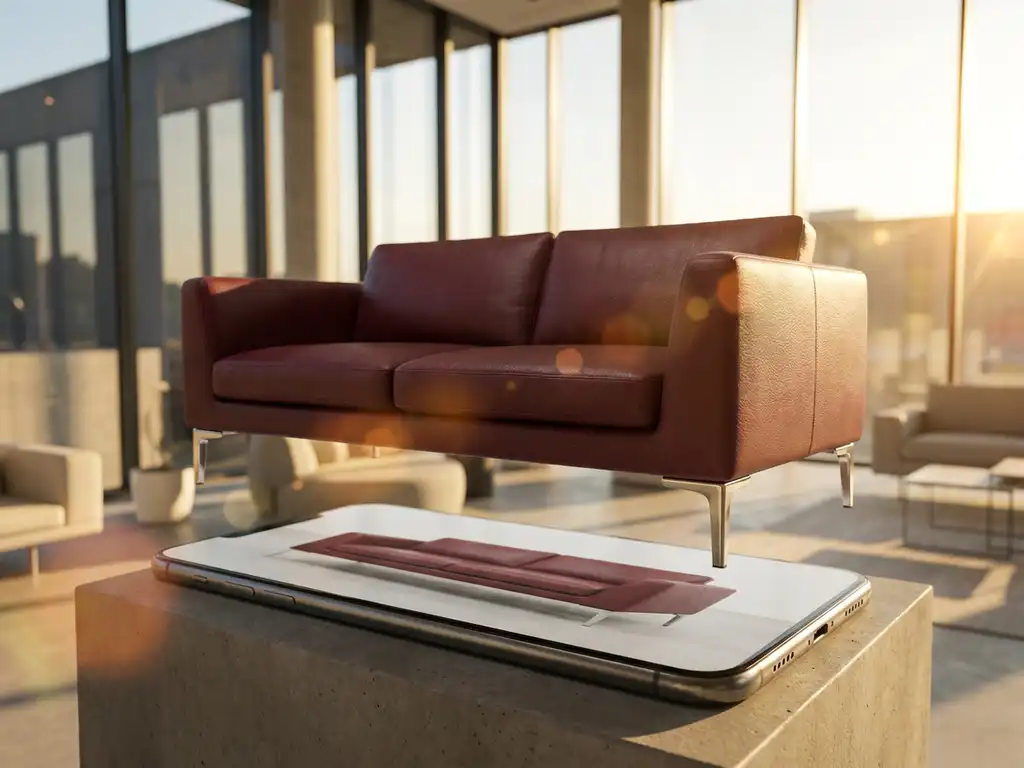
Retailers need furniture visualizer technology because it bridges the gap between imagination and reality in furniture shopping. This technology allows customers to see exactly how products will look in their space before purchasing, leading to higher conversion rates, fewer returns, and increased customer confidence. Modern furniture visualization combines 3D product configurators, room planning software, and augmented reality to create immersive shopping experiences that traditional showrooms cannot match.
Is limited showroom space costing you potential sales?
Physical showrooms can only display a fraction of your product catalog, forcing customers to imagine how different colors, fabrics, or configurations might look. This limitation means missed opportunities every day as customers walk away uncertain about products they cannot see. Smart retailers are expanding their display capacity infinitely by implementing 3D visualization technology that shows every product variant in photorealistic detail, allowing customers to explore your complete range without requiring additional floor space.
Is customer uncertainty driving up your return rates?
When customers cannot visualize how furniture will actually look in their homes, they make purchasing decisions based on incomplete information, leading to disappointment and returns. This uncertainty costs retailers significantly through processing returns, restocking fees, and lost customer relationships. Advanced room planning software eliminates this guesswork by letting customers place products in virtual representations of their actual spaces, ensuring they see exactly what they are buying before committing to a purchase.
What is furniture visualizer technology and how does it work?
Furniture visualizer technology is a digital platform that creates photorealistic 3D representations of furniture products, allowing customers to view, configure, and place items in virtual environments. It combines 3D modeling, real-time rendering, and interactive configuration tools to simulate the complete furniture buying experience digitally.
The technology works by converting product data into detailed 3D models that customers can manipulate in real time. Users can change colors, materials, sizes, and configurations while seeing instant visual updates. Advanced systems integrate with existing product information management systems to automatically generate thousands of product variations without manual intervention.
Modern furniture visualizers also include room planning software capabilities, enabling customers to design complete spaces by placing multiple furniture pieces together. This creates a comprehensive visualization experience that helps customers understand how individual products work within their broader interior design vision.
Why are traditional furniture showrooms becoming less effective?
Traditional furniture showrooms are becoming less effective because they cannot display the full range of product variations that modern customers expect to see. Physical space limitations mean retailers can only show one configuration per product, while customers want to see different colors, fabrics, and sizes before making decisions.
Consumer shopping behaviors have also shifted significantly. Today’s customers research extensively online before visiting stores, arriving with specific expectations about product options they have seen digitally. When showrooms cannot match this breadth of choice, customers experience disappointment and may seek alternatives elsewhere.
Additionally, maintaining large showroom inventories is expensive and inefficient. Retailers face high costs for floor space, sample inventory, and regular display updates, while still being unable to show customers everything they want to see. This creates a fundamental mismatch between customer expectations and what physical showrooms can deliver.
How does furniture visualization technology increase sales conversions?
Furniture visualization technology increases sales conversions by eliminating uncertainty in the buying process. When customers can see exactly how products will look in their space and try different configurations instantly, they feel confident making purchasing decisions, leading to conversion rate improvements of up to 40%.
The technology accelerates the decision-making process by allowing customers to explore options quickly without waiting for sales assistance or requesting different samples. This immediate gratification keeps customers engaged and prevents them from leaving to consider alternatives elsewhere.
Visualization also enables upselling opportunities by showing customers how additional items complement their selections. When customers can see complete room layouts with multiple coordinated pieces, they often add more items to their purchase than originally planned, increasing average order values significantly.
What’s the difference between basic 3D viewers and advanced furniture configurators?
Basic 3D viewers display static product models that customers can rotate and zoom, while advanced furniture configurators allow real-time customization of materials, colors, dimensions, and features with instant visual updates. Advanced systems also integrate pricing, inventory, and business rules to provide complete purchase-ready experiences.
Basic viewers typically show pre-rendered models with limited interaction. Customers can examine products from different angles but cannot modify them or see variations. These systems work well for simple products but fall short when dealing with customizable furniture that comes in multiple configurations.
Advanced configurators function as complete sales tools, enabling customers to build products to their exact specifications while seeing live pricing and availability. These systems handle complex business logic, such as material compatibility rules and manufacturing constraints, ensuring that every configuration customers create can actually be produced and delivered.
How does furniture visualizer technology reduce returns and customer complaints?
Furniture visualizer technology reduces returns and complaints by ensuring customers know exactly what they are purchasing before completing their order. When customers can see products in their actual space with accurate colors, materials, and proportions, the gap between expectation and reality virtually disappears.
The technology eliminates common sources of disappointment, such as products appearing different colors under home lighting or being larger or smaller than expected. By providing accurate scale references and realistic material representations, visualization tools help customers make informed decisions that they remain satisfied with after delivery.
Returns processing costs retailers significantly through logistics, restocking, and lost sales time. Visualization technology prevents these costs by getting the purchase right the first time, while also improving customer satisfaction and loyalty through positive buying experiences.
What should furniture retailers look for in visualization technology?
Furniture retailers should prioritize visualization technology that integrates seamlessly with existing systems, handles complex product configurations, and delivers photorealistic quality. The platform should support automated content generation, mobile compatibility, and scalable deployment across multiple sales channels.
Integration capabilities are crucial because the technology needs to work with current product information management, inventory, and e-commerce systems. Look for platforms that can automatically sync product data and generate visualizations without manual intervention, ensuring content stays current as inventory changes.
Quality and performance matter significantly for customer experience. The technology should render quickly on various devices while maintaining high visual fidelity. Additionally, consider platforms that offer proven implementation examples in the furniture industry, as sector-specific expertise ensures the solution addresses your unique business requirements effectively.
How iONE360 helps with furniture visualization
We provide comprehensive furniture visualization solutions that transform how retailers showcase their products and how customers shop for furniture. Our platform combines advanced 3D product configurators with integrated room planning capabilities, enabling complete visual commerce experiences that drive sales and reduce returns.
Key benefits of our solution include:
- Automated generation of photorealistic product visuals in all configurations
- Seamless integration with existing PIM, ERP, and e-commerce systems
- Advanced room planning tools that let customers design complete spaces
- Mobile-optimized experiences that work across all devices
- Proven results in reducing returns while increasing conversion rates
Built on over 45 years of furniture industry expertise, our technology handles the complexity of customizable products while delivering simple, intuitive customer experiences. Ready to see how furniture visualization can transform your sales process? Contact us to schedule a demonstration of our platform in action.
Frequently Asked Questions
How long does it typically take to implement furniture visualization technology?
Implementation timelines vary based on catalog size and system complexity, but most furniture retailers can deploy basic visualization capabilities within 4-8 weeks. The process involves integrating with existing systems, converting product data to 3D models, and training staff. Advanced features like room planning may require additional time for customization and testing.
What happens if my product catalog changes frequently – will the visualization stay current?
Modern furniture visualization platforms automatically sync with your product information management (PIM) system, ensuring visualizations update in real-time as you add new products, discontinue items, or change specifications. This automation eliminates manual content management and keeps your visual catalog current without ongoing effort.
Can customers save and share their furniture configurations with others?
Yes, most advanced furniture visualization platforms allow customers to save their configurations and room designs, then share them via email or social media. This feature is particularly valuable for customers who need approval from family members or want to compare different options over time before making a final decision.
How accurate are the colors and materials shown in furniture visualizers compared to real products?
High-quality furniture visualization technology uses calibrated color profiles and advanced rendering techniques to achieve 95%+ accuracy in color and material representation. However, viewing conditions like screen settings and lighting can affect perception, so leading platforms often include color disclaimers and offer physical samples for final verification.
What's the biggest mistake retailers make when implementing furniture visualization technology?
The most common mistake is focusing solely on the technology without training sales staff on how to use it effectively with customers. Successful implementations require staff education on guiding customers through the visualization process, addressing technical questions, and using the tool to enhance rather than replace personal selling skills.
Can furniture visualization technology work for custom or made-to-order products?
Absolutely. Advanced configurators excel at handling custom products by incorporating business rules, material compatibility constraints, and pricing logic. Customers can create unique configurations while the system ensures all selections are manufacturable and provides accurate pricing and delivery estimates in real-time.
How do I measure the ROI of furniture visualization technology?
Track key metrics including conversion rate improvements, average order value increases, return rate reductions, and time-to-purchase decreases. Most retailers see 20-40% conversion improvements and 30-50% return reductions within the first year. Additionally, measure soft benefits like reduced sales staff time spent on product explanations and increased customer satisfaction scores.