
The Business Impact of 3D Visual Commerce

Help customers understand products. Measure the commercial result.

3D visual commerce lets customers explore, configure and place products in a digital environment before buying. For furniture businesses, it can support purchase confidence, higher order value and more efficient visual content production. The business impact depends on the product range, customer journey and implementation.

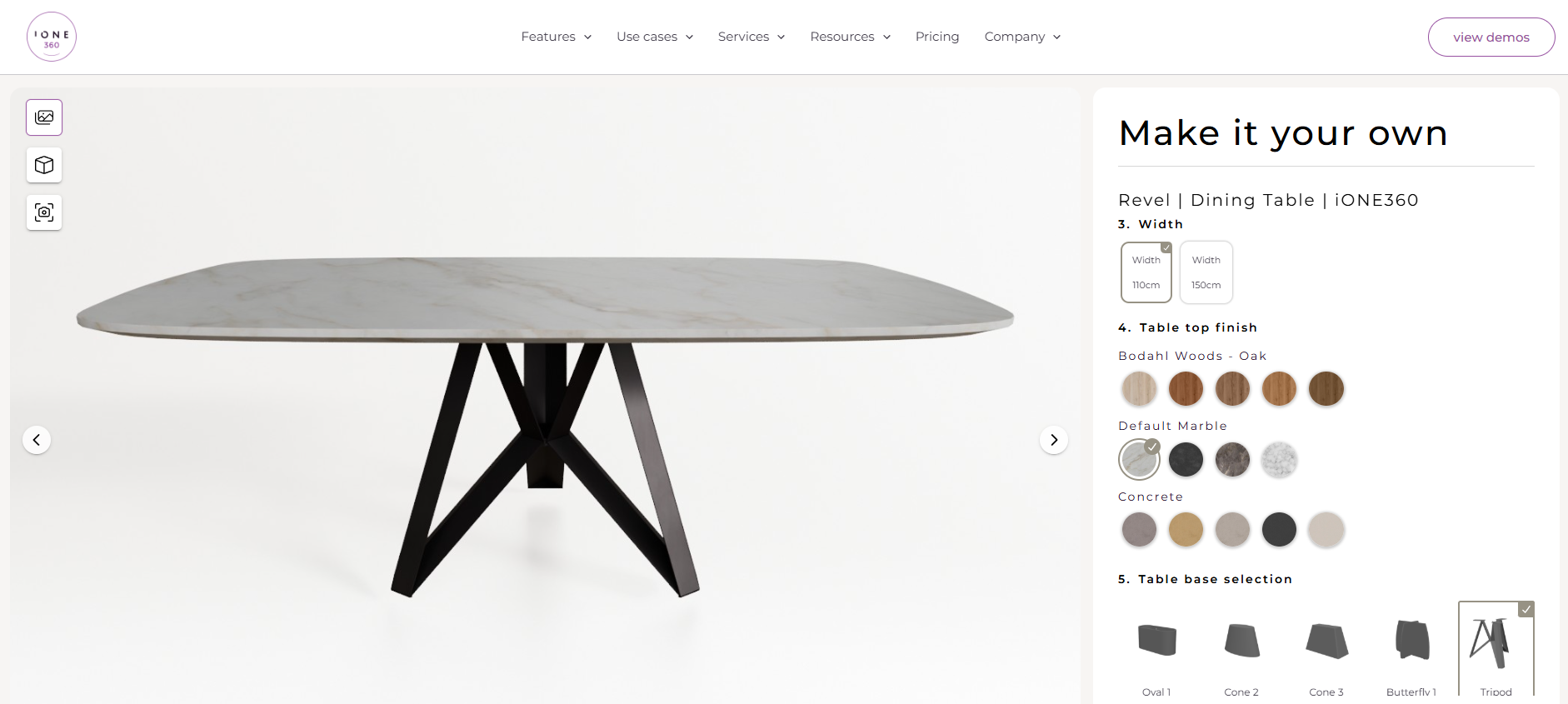
product-configurator-revel-dining-table-preview

What can 3D Visual Commerce change?

The business drivers behind 3D Visual Commerce can translate into measurable commercial and operational results. Depending on the product, customer journey and implementation, the impact can be seen across conversion, customer engagement, order value and operational costs.

Increase online conversion with
0 %
Increase store conversion with
0 %
Increase average order value with
0 %
Increase customer engagement with
0 %
Reduce return-related costs with
0 %
Reduce prod. visualization cost with
0 %

WHY 3D VISUAL COMMERCE DRIVES
BUSINESS IMPACT

1. GREATER PURCHASE CONFIDENCE

Customers can see their chosen dimensions, materials, colours and configurations as one complete product before they buy. This makes the final result easier to understand and helps customers feel more confident in their decision.

See the actual configuration > understand the result > buy with greater confidence​

3. HIGHER PERCEIVED VALUE

When customers can clearly see the difference between materials, dimensions, finishes and other product options, the added value of premium choices becomes easier to understand. Instead of evaluating upgrades based only on descriptions or price differences, customers can see how each choice changes the final product.

Compare options > see the difference > understand the added value > choose with confidence

5. MORE EFFECTIVE SALES SUPPORT

Sales teams can demonstrate configurations, compare options and show customers the result of their choices without relying on physical samples or imagination alone.

Configure > demonstrate > compare > validate

2. LESS CHOICE & DECISION UNCERTAINTY

Complex products often involve many choices and combinations. Interactive 3D visualization makes these options tangible, helping customers understand what is possible and evaluate alternatives more easily.

Explore options > compare alternatives > reduce uncertainty

4. GREATER ASSORTMENT VISIBILITY

Not every product, configuration or variant can be physically displayed or photographed. 3D Visual Commerce makes a much broader range of products available to explore and sell.

Digitize the product > visualize variants > make more of the assortment sellable

6. FEWER ERRORS AND MISUNDERSTANDINGS

When the selected configuration is clearly visualized and connected to product and order data, customers and sales teams have a shared reference for what is being purchased.

Configure visually > confirm the result > connect to product/order data

From Visualization to Business Impact

3D visualization does more than make products look better. It changes how customers understand, evaluate and ultimately buy products — turning a better product experience into measurable business impact.

1. Show more

Make more products, variants and possibilities available to explore.

2. Understand better

Customers gain a clearer understanding of products, options, dimensions and combinations.

3. Reduce uncertainty

Instead of imagining the final product, customers can validate their choices visually before ordering.

4. Buy with confidence

A clearer understanding of the product reduces uncertainty at the point of purchase and makes complex choices easier to evaluate.

5. Increase commercial value

Greater confidence and better product understanding can contribute to higher conversion, larger orders and more opportunities for cross-selling.

6. Operate more efficiently

The same 3D product data can support configuration, visualization, rendering, sales and ordering — reducing manual work and potential errors.

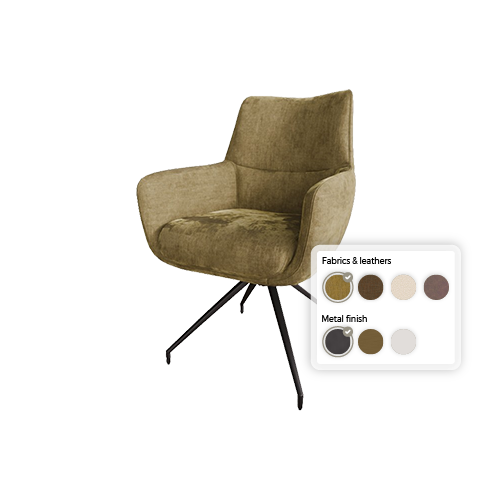
3d product configurator with rendered CGI for chairs preview

How does a 3D Product Configurator help furniture sales?

A 3D product configurator helps furniture buyers see their selected product options as one complete product. Fabrics, finishes, dimensions and components can be difficult to judge from separate photographs or samples.

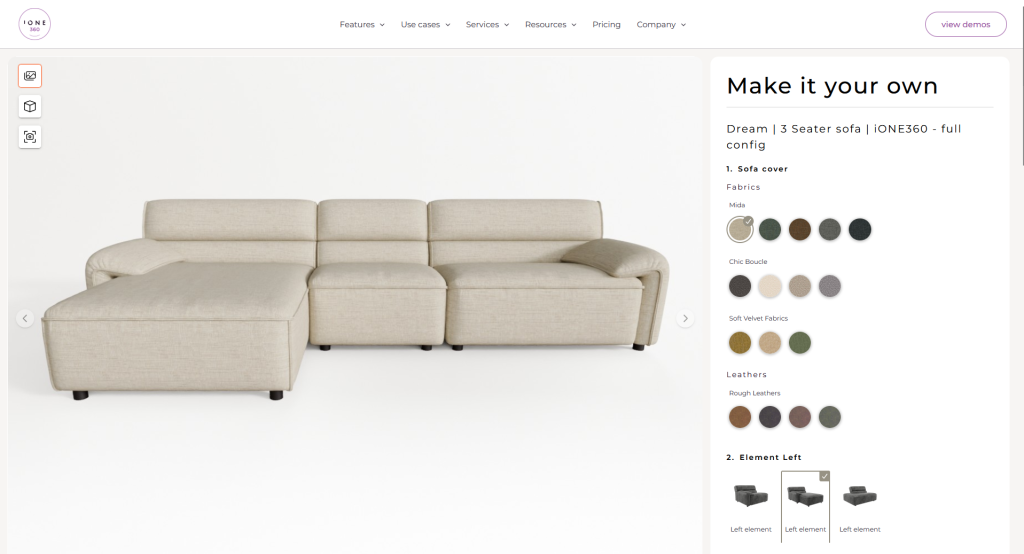
iONE360 combines visual product configuration with product rules and pricing. Buyers and sales teams can explore permitted options and continue with a defined product specification. Explore the 3D product configurator.

3d product configurator software screenshot for modular products

Higher conversion

Customers can see and validate their exact product choice before buying, reducing uncertainty at the point of decision.


Higher order value

Customers can see the value of premium materials, upgrades and additional options. This makes higher-value choices easier to justify and sell.

Fewer returns

Customers know what their chosen configuration will look like before ordering, reducing the risk of incorrect choices and mismatched expectations.

Lower visualization costs

One 3D product asset can replace much of the photography, rendering and manual image production needed to showcase different variants — while making new visuals faster and easier to create.


How does 3D room planning support cross-selling?

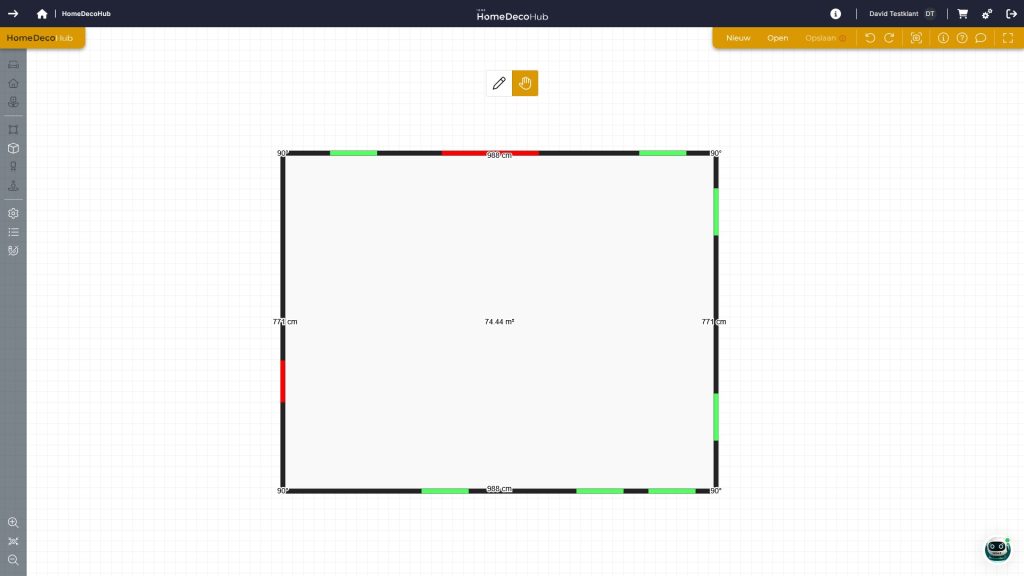
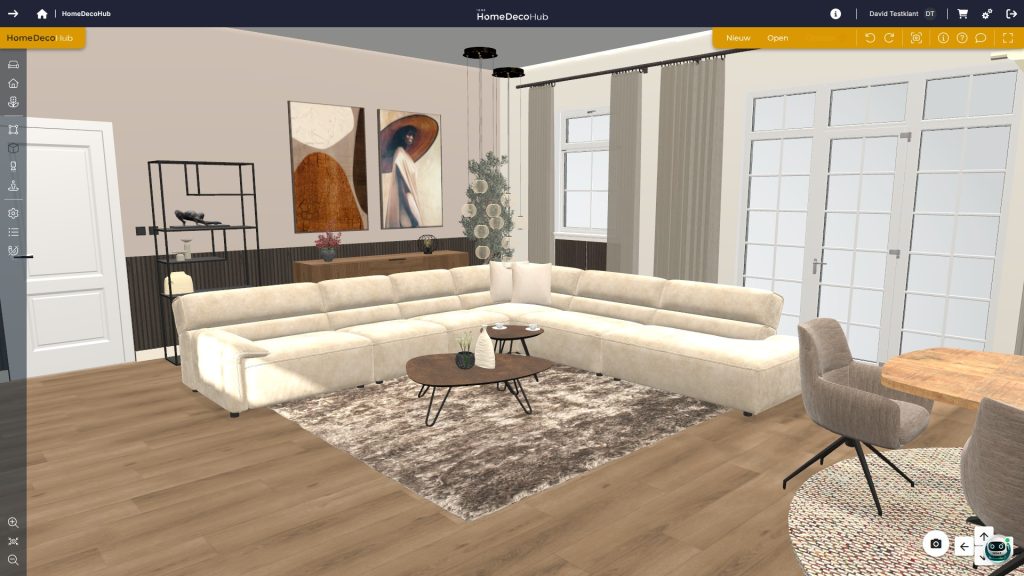
3D room planning helps customers evaluate several products together in a digital room. It adds context to individual product choices by showing scale, placement and combinations.

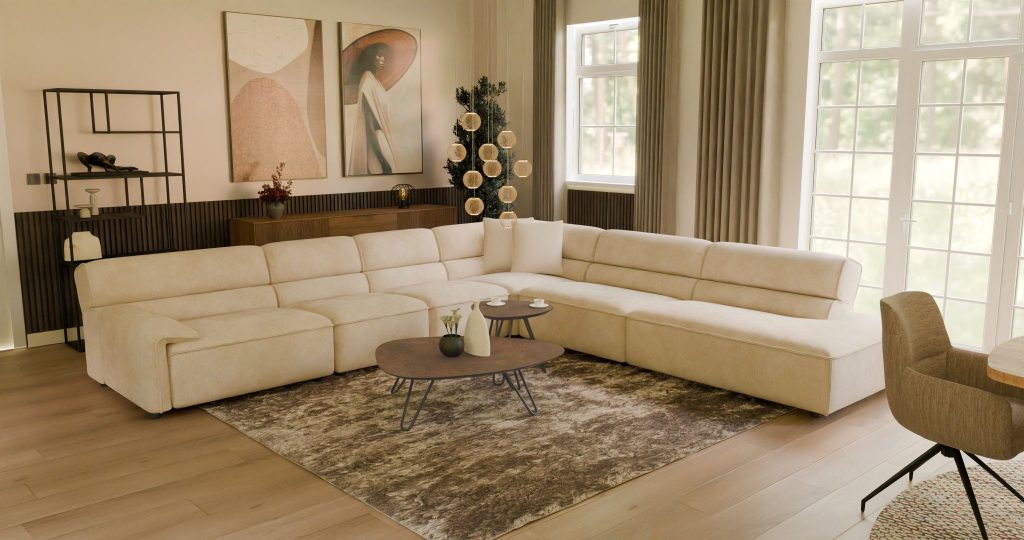
A buyer can compare a sofa with a table, chairs or storage, then configure each product to suit the intended interior. This creates opportunities for complementary purchases and complete-room sales.

Measure the result in products per order, complementary-category purchases and average order value. Longer planning sessions alone do not prove higher sales. Explore the iONE360 room planner.

screenshot of 3d room planning software of the ione360 platform showing a drawing of a room
screenshot of 3d room planning software of the ione360 platform showing modular sofa and decorations
render of 3d room planning software of the ione360 platform showing modular sofa and decorations

What could this mean for your business?

The impact of 3D Visual Commerce depends on your business, your products and your current customer journey. A small improvement in conversion or order value can already have a significant impact at scale.

Enter your key business figures to estimate the potential impact of 3D product configuration and room planning on revenue, order value and operational costs.



Frequently asked questions about 3D Visual Commerce

What is the business impact of 3D visual commerce?

3D visual commerce can improve how customers understand and select products. Potential business outcomes include higher conversion, larger orders, fewer expectation-related returns and lower repeated visual-content costs. The size of the effect must be measured for the specific product range and implementation.

What is the difference between product configuration and room planning?

Product configuration defines the options of one product, such as fabric, dimensions and finishes. Room planning places several products in a digital room. Together, they help buyers evaluate individual choices and the complete interior.

Does 3D visualization automatically increase conversion?

No. Conversion depends on product relevance, price, traffic quality, usability and the purchase journey. A 3D experience creates an opportunity to improve product understanding; a comparable measurement is needed to establish a conversion change.

Can 3D visual commerce reduce returns?

It may reduce returns caused by misunderstanding a product’s appearance or selected options. It cannot prevent every return. Track expectation-related returns separately from quality issues, delivery damage and other causes.

Which costs belong in a 3D visual commerce business case?

Include 3D models and materials, product-data preparation, rules and pricing setup, website or business-system integrations, software, testing and ongoing maintenance. Compare these costs with incremental contribution margin and verified operational savings over the same period.

Where should a furniture business start?

Start with a representative product family, a clear customer task and a measurable baseline. Define the permitted options, prepare the 3D assets, connect the sales handoff and test the journey on the devices customers use.

Explore interactive demos, customer stories or the visual commerce ROI calculator.

Looks promising, right?
Schedule a call with us.

Award Winning Software

Scroll to Top
cookies-website
Privacy Overview

This site uses cookies to provide you with the best possible user experience. Cookie information is stored in your browser and performs functions such as recognizing you when you return to our site and helping our team understand which parts of the site you find most interesting and useful.