

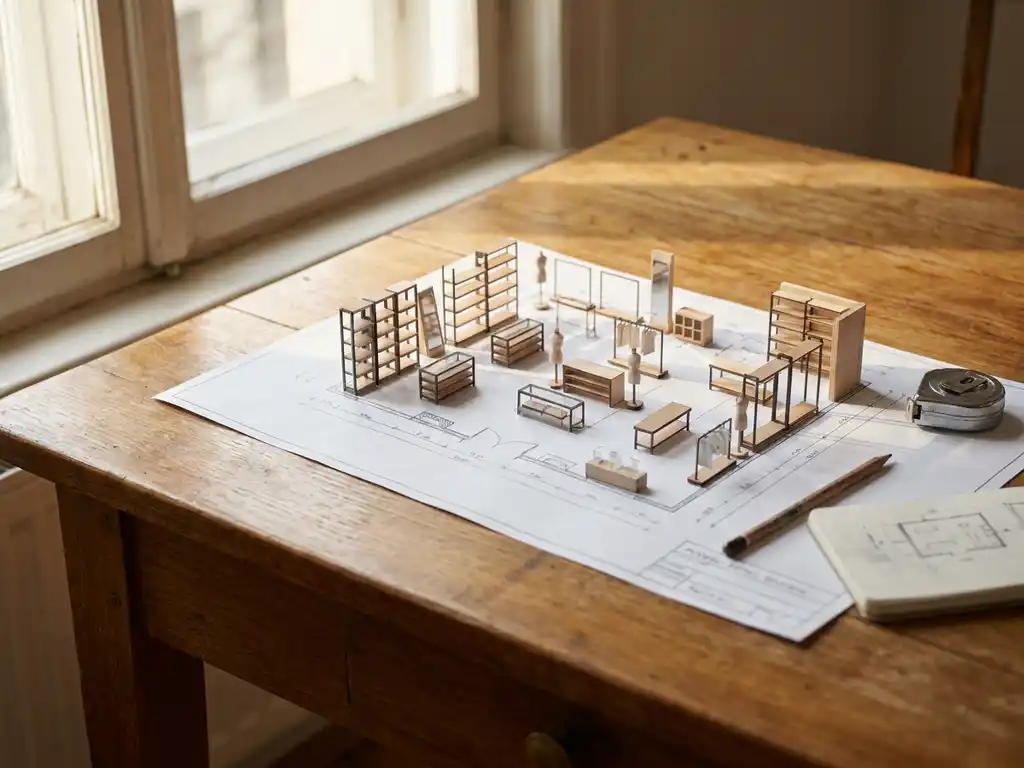
Space planning in retail involves strategically organizing store layout, product placement, and customer flow to maximize sales and enhance the shopping experience. Effective space planning optimizes every square foot to guide customers naturally through the store, showcase products appealingly, and create comfortable environments that encourage purchases and repeat visits.
What is space planning in retail and why does it matter?
Retail space planning is the strategic process of organizing store layout, fixtures, and merchandise to optimize customer experience and sales performance. It involves analyzing traffic patterns, product categories, and customer behavior to create efficient layouts that maximize revenue per square foot while ensuring smooth operations.
Space planning matters because it directly impacts your bottom line. Well-planned spaces guide customers naturally through your store, increase product visibility, and create comfortable shopping environments that encourage longer visits and larger purchases. Studies show that strategic space planning can increase sales by 20-30% without adding inventory or staff.
Beyond sales impact, effective space planning improves operational efficiency by streamlining restocking processes, reducing staff movement, and minimizing safety hazards. It also helps manage inventory more effectively by allocating appropriate space based on product turnover rates and seasonal demands.
How does store layout affect customer behavior and sales?
Store layout directly influences customer movement patterns, dwell time, and purchasing decisions through psychological triggers and physical design elements. Strategic layouts guide shoppers along predetermined paths, expose them to more products, and create environments that encourage impulse purchases and extended browsing.
The layout affects customer behavior through several mechanisms. Wide aisles and clear sight lines reduce anxiety and encourage exploration, while strategic product placement at decision points captures attention during natural pause moments. Comfortable spaces with adequate lighting and breathing room make customers feel relaxed and more likely to spend time browsing.
Different layout patterns serve different purposes. Grid layouts work well for grocery stores where efficiency matters, while free-flow designs suit boutiques aiming for discovery and browsing. Loop layouts ensure customers see the entire store, while forced-path designs maximize exposure to specific product categories. The key is matching your layout to your customer’s shopping mission and your business goals.
What are the key elements of effective retail space planning?
Effective retail space planning centers on five core elements: traffic flow optimization, strategic product placement, flexible fixture systems, adequate circulation space, and clear sight lines. These elements work together to create intuitive navigation, maximize product exposure, and ensure comfortable shopping experiences that drive sales.
Traffic flow forms the foundation of good space planning. This includes creating clear entry points that orient customers, establishing primary pathways that guide movement, and positioning key categories along natural routes. The 80/20 rule applies here – 80% of customers follow predictable patterns, so design for the majority while accommodating exceptions.
Product placement requires understanding your merchandise hierarchy and customer shopping patterns. High-demand items should be positioned to draw customers through the store, while impulse purchases work best near decision points like checkout areas. Seasonal flexibility is crucial – your space plan should accommodate changing inventory levels and promotional needs throughout the year.
Physical infrastructure includes appropriate aisle widths (minimum 36 inches for accessibility), adequate lighting levels, clear signage systems, and flexible fixture solutions that can adapt to changing needs. Consider both peak and off-peak traffic when determining space allocations to ensure comfort during busy periods without wasting space during slower times.
How do you optimize space planning for different retail formats?
Space planning optimization varies significantly by retail format, with each requiring specific approaches to layout, fixture selection, and customer flow management. Small boutiques prioritize intimate browsing experiences, while large format stores focus on efficient navigation and category organization to handle diverse product ranges and higher customer volumes.
For small retail spaces under 1,000 square feet, maximize vertical space with wall-mounted displays and multi-level fixtures. Create zones using different flooring materials or lighting to define areas without physical barriers. Focus on flexible fixtures that can be reconfigured easily for seasonal changes or special promotions.
Large format stores require clear wayfinding systems and logical department organization. Use anchor categories at opposite ends to encourage full-store traversal, with complementary products positioned along connecting pathways. Wide aisles accommodate shopping carts and high traffic, while smaller alcoves within departments create intimate shopping moments for specific categories.
Department stores benefit from shop-in-shop concepts that create brand experiences within the larger space. Each department should feel distinct while maintaining overall store cohesion through consistent materials, lighting, and signage systems. Cross-merchandising opportunities between departments can increase average transaction values.
What tools and technologies help with retail space planning?
Modern retail space planning relies on specialized software, 3D visualization tools, and data analytics platforms that enable precise layout design, virtual testing, and performance optimization. These technologies allow retailers to experiment with different configurations, visualize customer experiences, and make data-driven decisions before implementing physical changes.
Computer-aided design (CAD) software provides the foundation for professional space planning, allowing precise measurements, fixture placement, and technical drawings. More advanced tools include parametric design capabilities that automatically adjust layouts when constraints change, saving time during the revision process.
3D visualization and virtual reality tools let stakeholders experience proposed layouts before construction begins. These technologies are particularly valuable for testing customer sight lines, identifying potential bottlenecks, and communicating design concepts to team members who may struggle with traditional 2D plans.
Heat mapping and traffic analytics provide data-driven insights into actual customer behavior patterns. This information validates design assumptions and identifies opportunities for improvement in existing stores. Mobile analytics can track dwell times in specific areas, helping optimize product placement and promotional strategies.
Advanced room planning software enables customers to visualize products within their own spaces, bridging the gap between retail environments and home settings. This technology particularly benefits furniture and home decor retailers by helping customers make confident purchasing decisions.
How iONE360 helps with retail space planning
We provide advanced 3D visualization technology that transforms how furniture and home decor retailers approach space planning and customer engagement. Our comprehensive platform enables retailers to create immersive shopping experiences that help customers visualize products in their own spaces while optimizing store layouts for maximum impact.
Key benefits of our space planning solutions include:
- Interactive 3D room visualization that lets customers experiment with different furniture arrangements and configurations
- Real-time product customization within room settings, allowing immediate price and availability updates
- Seamless integration with existing retail systems for streamlined operations and inventory management
- Scalable implementation across multiple store locations and online platforms
- Data-driven insights into customer preferences and behavior patterns to optimize space allocation
Our room planning technology increases buying intent by up to 64% by showing products in realistic environments, helping customers make confident decisions while reducing returns and increasing order values. Ready to see how our space planning solutions can transform your retail experience? Explore our showcases or contact us for a personalized demonstration.
Frequently Asked Questions
How often should I redesign my store layout to keep it optimized?
Most retailers should evaluate their space plan every 6-12 months and make minor adjustments quarterly based on sales data and seasonal changes. Major layout overhauls are typically needed every 3-5 years or when business model changes occur. However, high-traffic areas like entrance displays and checkout zones may benefit from monthly refreshes to maintain customer interest and optimize for current promotions.
What's the biggest mistake retailers make when implementing a new space plan?
The most common mistake is changing too much at once without testing customer response. Successful space planning involves gradual implementation with careful monitoring of sales performance and customer feedback. Start with one section or department, measure results for 4-6 weeks, then apply learnings to other areas. This approach minimizes disruption and allows for adjustments before committing to store-wide changes.
How do I measure the success of my space planning changes?
Track key performance indicators including sales per square foot, average transaction value, dwell time in specific areas, and customer traffic patterns using heat mapping technology. Compare these metrics before and after layout changes, focusing on 30-60 day periods to account for customer adaptation. Also monitor conversion rates by department and inventory turnover to ensure your space allocation matches actual sales performance.
Can small retailers with limited budgets still benefit from professional space planning?
Absolutely. Start with free or low-cost tools like basic CAD software and focus on the fundamentals: clear pathways, strategic product placement, and good lighting. Many space planning principles cost nothing to implement – simply rearranging existing fixtures based on traffic flow and sales data can yield significant improvements. Consider hiring a consultant for a one-time assessment rather than ongoing services to maximize your budget impact.
How do I handle space planning for seasonal inventory fluctuations?
Design your space plan with flexible zones that can expand or contract based on seasonal needs. Use modular fixtures and moveable displays that can be reconfigured quickly. Allocate 15-20% of your floor space as flexible seasonal areas, and create a calendar that maps out space allocation changes throughout the year. This proactive approach prevents cramped displays during peak seasons and empty spaces during slower periods.
What should I do if customers consistently avoid certain areas of my store?
First, analyze why these dead zones exist – poor lighting, difficult access, or lack of compelling products are common causes. Try relocating high-demand items to these areas temporarily to draw traffic, improve sight lines from main pathways, and ensure adequate lighting. If the area remains problematic, consider converting it to storage, fitting rooms, or customer service functions rather than forcing merchandise placement in low-traffic zones.
How do I balance aesthetic appeal with functional space planning requirements?
Successful retail spaces achieve both by using design elements that serve dual purposes. Choose fixtures that are both visually appealing and functionally efficient, use lighting to create ambiance while ensuring product visibility, and select materials that enhance your brand while being durable and easy to maintain. Remember that the most beautiful space is one that generates sales – functionality should drive decisions, with aesthetics enhancing rather than compromising performance.