

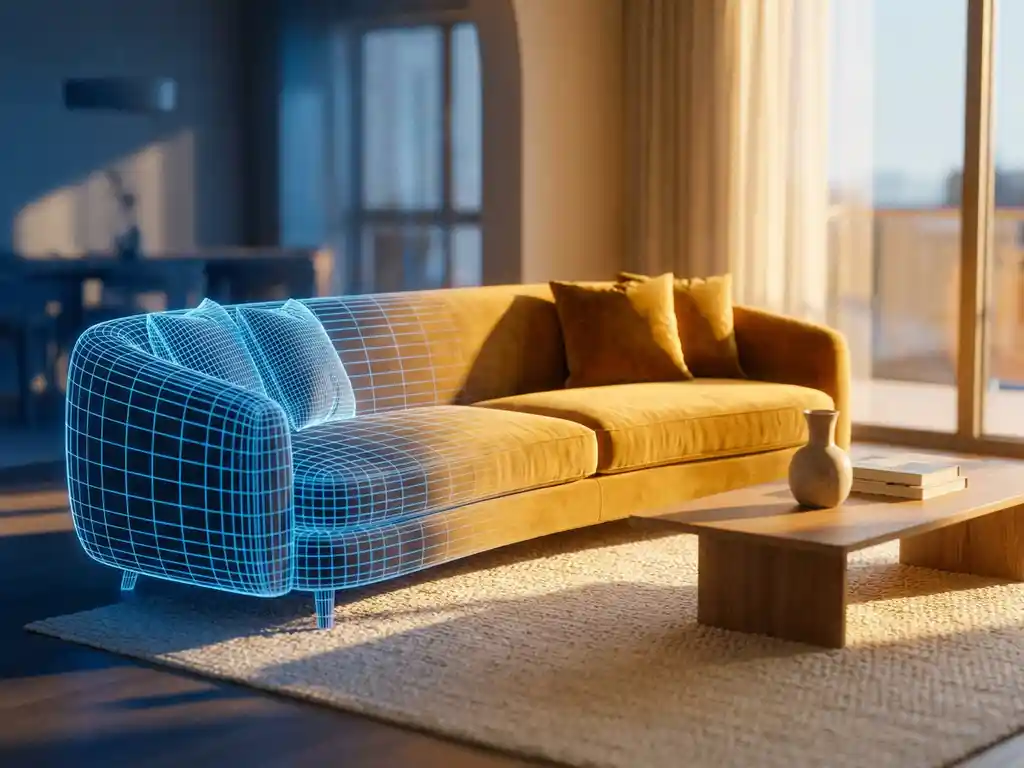
A furniture visualizer is a digital tool that creates realistic 3D representations of furniture products, allowing customers to see how items will look in different configurations, colors, and settings before purchasing. These advanced visualization platforms combine 3D modeling, augmented reality, and room planning software to transform static product catalogs into interactive, customizable experiences that help customers make confident buying decisions.
What is a furniture visualizer and how does it work?
A furniture visualizer is a 3D software platform that creates photorealistic digital representations of furniture products. It works by converting product specifications into interactive 3D models that customers can customize, rotate, and place in virtual room environments to see exactly how items will look before purchasing.
The technology starts with detailed product data including dimensions, materials, and available options. Advanced rendering engines then generate high-quality 3D models that accurately represent textures, lighting, and proportions. Customers interact with these models through web browsers or mobile apps, selecting different colors, fabrics, and configurations in real-time.
Modern furniture visualizers integrate with business systems to pull live pricing and inventory data. When customers make selections, the platform automatically calculates costs and availability. Some advanced systems also include space planning tools that let customers arrange multiple furniture pieces in virtual rooms, creating complete design scenarios that help with larger purchasing decisions.
How do furniture visualizers increase sales and conversions?
Furniture visualizers increase sales by reducing purchase uncertainty and enabling customers to see products in their intended environment. Studies show that interactive 3D product visualization can boost conversion rates by up to 40% while increasing average order values as customers gain confidence to purchase additional items.
The primary mechanism is confidence building. When customers can see exactly how a sofa will look in their living room or how different fabric options appear under various lighting conditions, purchase hesitation decreases dramatically. This visual confidence translates directly into higher conversion rates and fewer abandoned shopping carts.
Visualizers also enable upselling opportunities that traditional photography cannot match. Customers exploring a basic chair configuration often discover premium fabric options or matching accessories when they can instantly see the visual impact. The interactive nature encourages experimentation with higher-value options, naturally increasing average order values without aggressive sales tactics.
What’s the difference between 3D visualization and traditional product photography?
3D visualization creates infinite product variations from a single digital model, while traditional photography requires separate shoots for each color, fabric, and configuration option. This fundamental difference makes 3D visualization infinitely more scalable and cost-effective for businesses with customizable products.
Traditional photography captures fixed moments under specific lighting conditions. A red sofa photographed in a studio setting cannot show how it looks in blue fabric or in a customer’s actual living room. Each variation requires new photography, creating exponential costs as product options multiply.
3D visualization generates any combination on demand. One digital furniture model can display thousands of fabric options, colors, and room settings instantly. Customers can see products under different lighting conditions, from multiple angles, and in various environments without additional production costs. The technology also enables features impossible with photography, such as X-ray views of internal construction or animated assembly sequences.
How do furniture visualizers reduce product returns?
Furniture visualizers reduce returns by giving customers accurate expectations about product appearance, size, and fit within their space. When customers can see realistic representations of how furniture will look in their homes, the gap between expectation and reality shrinks dramatically, leading to fewer disappointments and return requests.
Size and proportion issues account for a significant percentage of furniture returns. Customers often struggle to judge how a piece will fit in their room from traditional photos alone. Advanced room planning software solves this by letting customers input their actual room dimensions and see furniture to scale within their space. This spatial accuracy prevents the common problem of furniture appearing too large or small upon delivery.
Color and material mismatches also drive returns. High-quality 3D visualization shows accurate fabric textures, wood grains, and finishes under realistic lighting conditions. Customers can compare options side-by-side and see how materials will coordinate with their existing decor, reducing the likelihood of color disappointments that lead to returns.
Can furniture visualizers integrate with existing business systems?
Modern furniture visualizers integrate seamlessly with existing business systems including ERP, PIM, CRM, and e-commerce platforms through APIs and standard data formats. These integrations enable real-time pricing, inventory checking, and order processing directly from the visualization interface without manual data entry or system switching.
Integration typically occurs at multiple touchpoints. Product information management systems feed specifications, pricing, and availability data into the visualizer. When customers configure products, the system checks inventory levels and calculates accurate pricing including any customization premiums. Completed configurations flow directly into order management systems, maintaining data consistency throughout the sales process.
Advanced platforms also integrate with manufacturing systems to generate production specifications automatically. When a customer selects a custom fabric and configuration, the system creates detailed manufacturing instructions and material requirements. This end-to-end integration eliminates manual translation steps that often introduce errors and delays in custom furniture production.
How iONE360 helps with furniture visualization
We provide a comprehensive visual commerce platform that transforms how furniture businesses showcase and sell their products. Our solution combines advanced 3D visualization, interactive product configuration, and room planning software into one powerful platform that drives sales while reducing costs.
Key benefits our clients experience include:
- Elimination of costly product photography for variants through automated 3D rendering
- Increased conversion rates as customers gain confidence through realistic visualization
- Reduced returns due to accurate size and appearance expectations
- Seamless integration with existing ERP, PIM, and e-commerce systems
- Scalable solution handling millions of product configurations effortlessly
Built on over 45 years of furniture industry expertise, our platform handles complex customizable products with sophisticated business rules and pricing. Ready to see how visual commerce can transform your furniture business? Explore our showcases or contact us for a personalized demonstration.
Frequently Asked Questions
How long does it take to implement a furniture visualizer on my website?
Implementation typically takes 4-8 weeks depending on your product catalog size and system integration requirements. The process includes 3D model creation, platform configuration, system integrations, and testing. Companies with well-organized product data and clear specifications can often launch faster, while those requiring extensive catalog digitization may need additional time.
What happens if my furniture has complex customization options like multiple fabric zones or hardware choices?
Advanced furniture visualizers handle complex customizations through sophisticated rule engines that manage dependencies between options. For example, if certain fabrics are only available with specific frame colors, the system automatically shows valid combinations. The platform can manage multiple fabric zones, hardware options, and even structural modifications while maintaining accurate pricing and availability.
Do customers need to download special software to use furniture visualization tools?
No, modern furniture visualizers run entirely in web browsers without requiring downloads or plugins. Customers can access full 3D visualization, room planning, and customization features directly through your website on desktop, tablet, or mobile devices. This accessibility removes barriers to adoption and ensures maximum customer engagement.
How do you ensure the 3D models accurately represent the actual furniture quality and appearance?
High-quality furniture visualizers use advanced material scanning and photogrammetry to capture exact fabric textures, wood grains, and finishes. The process includes color calibration, lighting simulation, and validation against physical samples. Regular updates ensure digital models stay current with material changes, maintaining accuracy that customers can trust.
What's the typical ROI timeline for implementing furniture visualization technology?
Most furniture retailers see positive ROI within 6-12 months through increased conversion rates, reduced photography costs, and fewer returns. The exact timeline depends on your current conversion rates, product complexity, and implementation scope. Companies with highly customizable products often see faster returns due to greater cost savings from eliminated photography.
Can furniture visualizers handle room-scale projects with multiple pieces and design coordination?
Yes, advanced platforms include comprehensive room planning tools that let customers design entire spaces with multiple furniture pieces. These tools provide design suggestions, ensure proper spacing and proportions, and can even recommend coordinating accessories. This capability increases average order values as customers purchase complete room solutions rather than individual pieces.
How do you handle inventory management when customers can create millions of possible product combinations?
Smart furniture visualizers integrate with your inventory management system to track component availability in real-time. When customers configure products, the system checks fabric, hardware, and frame availability instantly. If components are backordered, customers receive accurate delivery estimates, preventing overselling while maintaining transparency about lead times.