

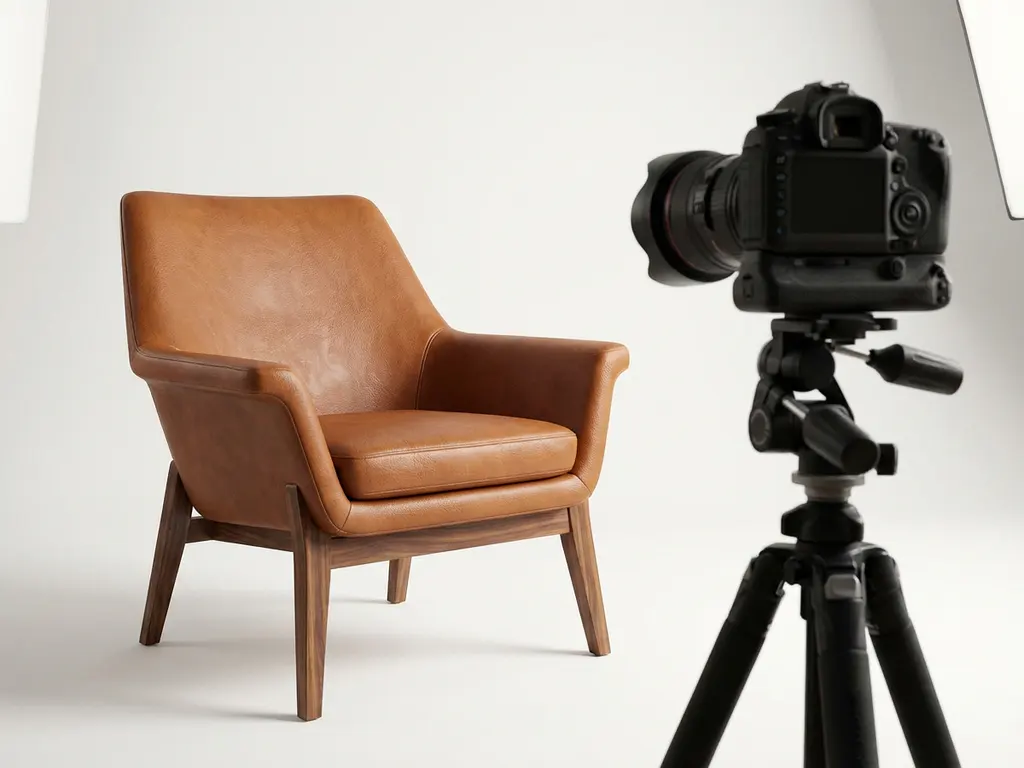
A 3D product configurator can effectively replace traditional product photography for many businesses, particularly those selling customisable products. These advanced systems generate photorealistic images through 3D rendering technology, eliminating the need for costly photo shoots whilst providing unlimited product variations. This transformation is especially valuable for furniture, home décor, and other configurable products, where showing every possible combination through traditional photography would be impractical and expensive.
What exactly is a 3D product configurator, and how does it create product images?
A 3D product configurator is a digital platform that uses three-dimensional rendering technology to create photorealistic product images without traditional photography. The system builds detailed 3D models of products, complete with accurate materials, textures, and lighting, then renders these models into high-quality images that customers can customise in real time.
The technology works by creating digital twins of physical products using sophisticated 3D modelling software. These models include precise measurements, material properties, and surface textures that mirror real-world products. When customers make selections—such as changing colours, fabrics, or configurations—the system instantly renders new images showing exactly how the customised product will look.
The rendering process involves complex calculations that simulate how light interacts with different materials and surfaces. Advanced algorithms ensure that shadows, reflections, and textures appear realistic, creating images that are virtually indistinguishable from professional photography. This visual product configurator approach allows businesses to showcase millions of product combinations without ever photographing a single variant.
What are the main advantages of using 3D configurators over traditional product photography?
Cost efficiency represents the most significant advantage, as 3D configurators eliminate recurring photography expenses whilst providing unlimited product variations. Traditional photo shoots require studio time, professional photographers, equipment, and post-production editing for every new product or variant, creating substantial ongoing costs.
Speed and scalability offer immediate business benefits. Once 3D models are created, new product images can be generated instantly for any configuration. This eliminates the weeks or months typically required to organise photo shoots, especially when products have multiple colour, material, or size options.
Consistency across all product imagery becomes automatic with 3D rendering. Every image maintains identical lighting, angles, and quality standards, which strengthens brand presentation and customer trust. Traditional photography often suffers from variations in lighting conditions, photographer styles, and editing approaches.
The ability to showcase impossible combinations provides unique marketing opportunities. 3D configurators can display products in settings, angles, or configurations that would be difficult or impossible to photograph, including cutaway views, exploded diagrams, or products in various room settings.
What are the limitations and challenges of replacing photography with 3D configurators?
Initial setup costs can be substantial, requiring investment in 3D modelling, software platforms, and technical expertise. Creating accurate 3D models demands significant time and skilled professionals, making the upfront investment higher than traditional photography for businesses with limited product ranges.
Technical complexity presents ongoing challenges for many organisations. Managing 3D models, updating product configurations, and maintaining rendering quality requires technical knowledge that many businesses lack internally. This often necessitates ongoing support relationships or staff training.
Quality considerations become critical when products have complex textures, intricate details, or unique material properties. Whilst 3D rendering technology has advanced significantly, some materials—particularly fabrics, wood grains, or metallic finishes—can be challenging to replicate with complete accuracy.
Customer acceptance varies, particularly among demographics that prefer seeing actual photographs of products. Some customers remain sceptical of rendered images, preferring the authenticity they associate with traditional photography, especially for high-value purchases.
How much does it cost to implement a 3D product configurator compared to ongoing photography expenses?
Initial implementation costs typically range from moderate to substantial, depending on product complexity and desired features. This includes 3D model creation, platform setup, integration with existing systems, and staff training. However, these upfront expenses often pay for themselves within 12–24 months for businesses with extensive product ranges.
Ongoing photography expenses accumulate rapidly, particularly for businesses with seasonal collections or frequent product updates. Professional photo shoots can cost thousands per session, with additional expenses for studio rental, model fees, and post-production editing. Businesses with hundreds or thousands of product variants face exponentially higher costs.
Return on investment calculations favour 3D configurators for companies with configurable products. The break-even point typically occurs when businesses need to photograph more than 50–100 product variations annually, though this varies based on product complexity and photography requirements.
Hidden cost savings include reduced storage requirements for physical samples, elimination of shipping costs for photography purposes, and decreased time to market for new products. These indirect benefits often contribute significantly to the overall financial advantage of 3D configuration systems.
Which types of products and industries benefit most from 3D configurator technology?
Furniture and home décor industries represent the ideal use case for 3D configurators, as these products typically offer multiple customisation options, including fabrics, colours, finishes, and configurations. The ability to show sofas in dozens of fabric options or kitchen cabinets in various wood finishes provides immense value.
Products with high customisation complexity benefit most from 3D rendering technology. This includes modular furniture, built-to-order items, and products for which customers regularly request specific combinations that would be impossible to photograph comprehensively.
Industries selling through multiple channels gain particular advantages from consistent 3D imagery. Manufacturers who sell through dealers, online platforms, and direct channels can provide identical high-quality visuals across all touchpoints, strengthening brand consistency and the customer experience.
Businesses with space constraints in showrooms or retail locations find 3D configurators invaluable. Rather than displaying every possible product variant, retailers can showcase the full range digitally whilst maintaining a smaller physical inventory for customer interaction.
How iONE360 helps with 3D product visualisation and configuration
iONE360 addresses the challenges of replacing traditional photography with comprehensive 3D visualisation technology specifically designed for the furniture and home décor industries. Our platform combines advanced rendering capabilities with practical business integration to deliver measurable results.
Key features include:
- Automated packshot generation for unlimited product variations
- Augmented reality capabilities allowing customers to visualise products in their own spaces
- Room planning tools that let customers combine and configure multiple products
- Seamless integration with existing PIM, ERP, and e-commerce systems
- Web-based platform requiring no downloads or special software
The platform handles complex customisable products with sophisticated business rules and pricing structures, often managing millions of possible variations whilst maintaining photorealistic quality. Back-end users can create configurations and add 3D visualisations that translate into guided sales processes.
Ready to explore how 3D product configuration can transform your visual marketing approach? View our interactive showcases to see the technology in action, or contact our team to discuss your specific requirements and see how iONE360 can replace your photography costs whilst enhancing the customer experience.
Related Articles
- How do 3D product configurators keep product information up to date?
- Can a 3D product configurator zoom in on product details like stitching and texture?
- How are home décor companies successfully using 3D product configurators?
- Can a 3D product configurator show products in a room setting?
- How will 3D product configurators transform my furniture business?
