

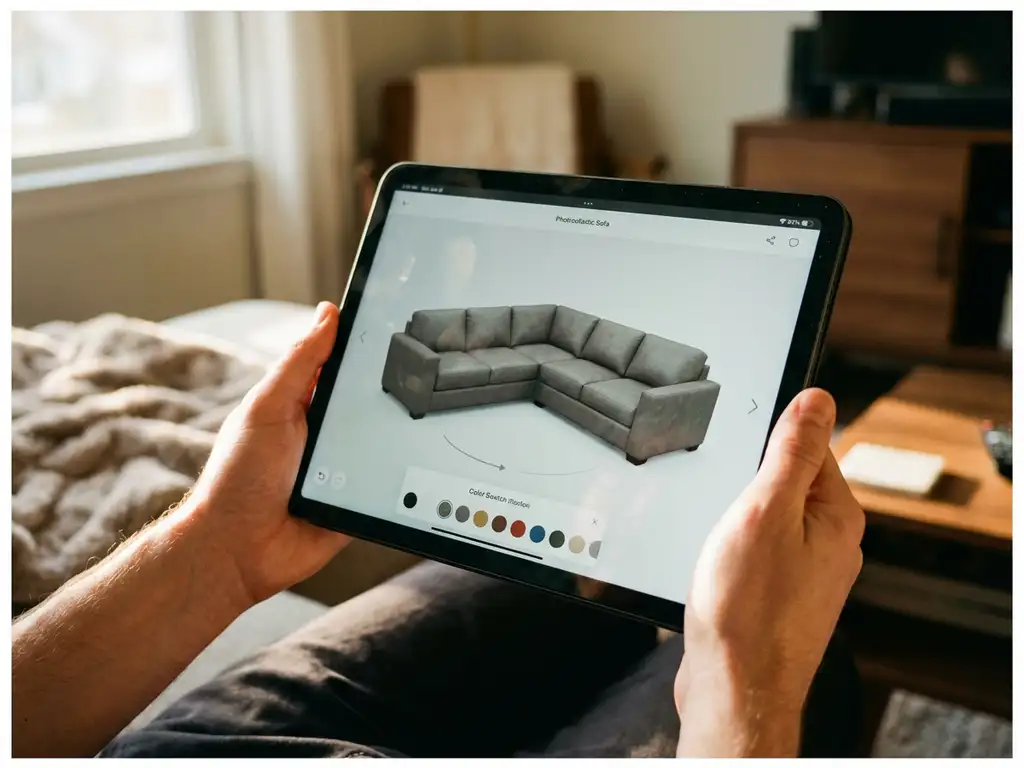
3D product configurators simplify complex products by transforming overwhelming technical specifications into visual, interactive experiences. They break down complicated choices into guided steps, allowing customers to see exactly what they’re buying before making decisions. This visual approach reduces confusion and builds confidence in purchasing decisions for products with multiple customisation options.
What makes complex products so difficult for customers to understand?
Complex products overwhelm customers because they present too many variables simultaneously without clear visual context. When faced with dozens of material options, size variations, and feature combinations, customers experience cognitive overload, which makes decision-making nearly impossible.
Traditional product presentation methods fail because they rely heavily on technical specifications and static images. A sofa with 15 fabric choices, 8 leg styles, and 6 size options creates hundreds of combinations that customers cannot visualise. Text descriptions like “charcoal grey performance fabric” don’t help customers understand how the final product will look in their space.
The gap between product features and customer needs creates additional confusion. Customers want to know how a product will fit their lifestyle, not memorise technical specifications. When product information focuses on manufacturing details rather than practical benefits, customers struggle to connect features with their actual requirements.
This complexity leads to decision paralysis, where customers abandon purchases rather than risk making the wrong choice. Without clear visualisation tools, customers cannot bridge the gap between product possibilities and their specific needs.
How do 3D configurators transform complex information into clear choices?
3D configurators eliminate complexity by presenting one decision at a time through guided, visual workflows. Instead of overwhelming customers with every option simultaneously, these tools use progressive disclosure to reveal choices in logical sequences that build understanding gradually.
Visual simplification transforms abstract specifications into immediate, understandable outcomes. When a customer selects a fabric option, they see the change instantly applied to a realistic 3D model. This immediate visual feedback replaces confusing technical descriptions with clear cause-and-effect relationships.
Real-time visualisation allows customers to experiment confidently with different combinations. They can change colours, materials, and sizes while seeing exactly how each choice affects the final product. This interactive exploration removes guesswork and builds confidence in customisation decisions.
Step-by-step guided processes ensure customers never feel lost or overwhelmed. The configurator presents relevant options at each stage, explaining how choices affect functionality, appearance, and price. This structured approach transforms complex product selection into an intuitive, manageable experience.
What psychological principles make 3D configurators so effective for understanding?
Visual learning preferences make 3D configurators naturally effective because most people process visual information faster and more accurately than text. When customers see product changes instantly, they understand options without mentally translating descriptions into visual outcomes.
Interactive engagement creates emotional investment in the configuration process. Customers who actively participate in designing their product feel ownership and confidence in their choices. This hands-on approach transforms passive browsing into active decision-making that builds purchase commitment.
Immediate cause-and-effect relationships align with natural human learning patterns. When customers select an option and see instant results, they understand the impact without confusion or delay. This immediate feedback loop creates clear mental connections between choices and outcomes.
Reduced cognitive load through guided decision-making prevents overwhelm. By presenting relevant options in logical sequences, configurators work with natural information-processing patterns rather than against them. Customers can focus on one decision at a time without losing sight of the overall product vision.
The sense of control and exploration satisfies psychological needs for autonomy in purchasing decisions. Customers feel empowered when they can experiment with options and see results immediately, leading to greater satisfaction with their final choices.
Which types of complex products benefit most from 3D configuration?
Furniture with multiple customisation options sees the greatest impact from 3D configuration because customers need to visualise how different materials, colours, and sizes work together. Sofas, wardrobes, and kitchen units with numerous component variations become manageable when customers can see each choice applied to realistic 3D models.
Modular products with component variations benefit significantly because customers must understand how pieces fit together. Storage systems, office furniture, and shelving units require spatial understanding that static images cannot provide effectively. Interactive 3D configuration shows how modules connect and function as complete systems.
Products for which size, colour, and material combinations create complexity are ideal candidates for visual configuration. When customers need to coordinate multiple elements simultaneously, 3D configurators prevent mismatched choices and ensure harmonious final products.
Technical equipment with various specifications becomes more accessible through visual configuration. Even complex products like industrial machinery or specialised equipment benefit when customers can see how different options affect appearance and functionality.
The common factor across successful 3D configuration applications is the need for customers to understand relationships between multiple variables that affect the final product outcome.
How does iONE360 help with making complex products easy to understand?
iONE360’s advanced visual product configurator addresses complex product understanding through sophisticated 3D visualisation that shows every product variation in photorealistic detail. Our platform transforms overwhelming product catalogues into intuitive, guided experiences that build customer confidence.
Our solution provides specific benefits for complex product understanding:
- Step-by-step guided configuration that prevents overwhelming customers with too many choices simultaneously
- Real-time 3D visualisation showing exactly how each customisation choice affects the final product
- Augmented reality integration allowing customers to see products in their actual spaces
- Automated high-quality product imagery generation for every possible configuration
- Seamless integration with existing business systems for consistent product information
The result is reduced customer confusion, faster decision-making, and increased confidence in purchases. Customers understand exactly what they’re buying because they can see, explore, and customise products through realistic visual experiences.
Ready to transform how customers understand your complex products? Explore our showcases to see iONE360 in action, or contact us to discuss how visual configuration can simplify your product complexity and boost customer confidence.
Related Articles
- Can a 3D product configurator generate PDF quotes for customers?
- What does a 3D product configurator look like for the end customer?
- Can a 3D product configurator work without technical knowledge?
- Do 3D product configurators support multiple languages for international sales?
- Can multiple customers use a 3D product configurator at the same time?
