

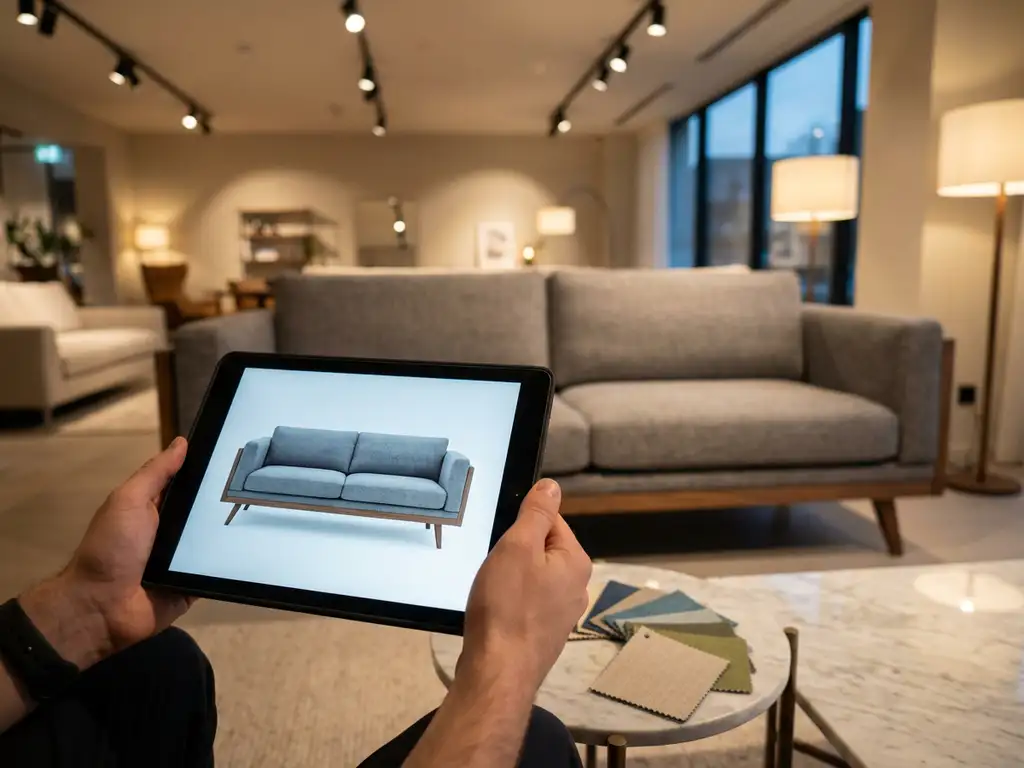
A 3D product configurator is an interactive digital tool that allows customers to customise and visualise products in real time through their web browser. It enables retailers to showcase countless product variations without expensive photography while giving customers confidence in their purchasing decisions. This technology transforms how retailers present customisable products online, addressing everything from technical implementation to the impact on customer behaviour.
What exactly is a 3D product configurator, and how does it work?
A 3D product configurator is a web-based application that renders three-dimensional product models that customers can modify by selecting different colours, materials, sizes, and features. The system instantly updates the visual representation to reflect each change, creating an interactive shopping experience that mimics examining products in person.
The technical process begins when customers access the configurator through a retailer’s website. They interact with intuitive controls to modify product attributes such as fabric choices, finishes, or dimensions. The underlying 3D engine processes these selections and renders updated visuals in real time, often including advanced features like 360-degree rotation, zoom capabilities, and augmented reality viewing.
Modern configurators integrate with existing business systems, including inventory management, pricing engines, and content management platforms. This integration ensures that available options, current pricing, and product specifications remain accurate across all customer touchpoints while maintaining seamless performance.
Why do retailers need 3D product configurators in today’s market?
Retailers face mounting pressure to provide personalised shopping experiences while managing the impossibility of photographing every product variation. Traditional product photography becomes prohibitively expensive when dealing with customisable items that could have thousands of potential combinations across colours, materials, and configurations.
Customer expectations have evolved significantly, with shoppers demanding the ability to visualise exactly what they’re purchasing before committing to a purchase. This expectation intensifies for higher-value items like furniture, where customers want confidence in their colour and style choices without visiting physical showrooms.
Competitive pressures also drive adoption, as retailers offering superior visualisation tools gain advantages in conversion rates and customer satisfaction. The shift toward online shopping, accelerated by recent global changes, means retailers must replicate the tactile and visual experience of physical stores through digital channels.
Additionally, 3D configurators address practical business challenges, including reduced return rates, decreased reliance on physical inventory for display purposes, and the ability to launch new product variations without extensive photography shoots.
What types of products work best with 3D configurators?
Furniture and home décor products are ideal candidates for 3D configuration due to their visual nature and high customisation potential. Sofas, chairs, tables, and storage solutions benefit tremendously because customers can visualise different upholstery options, finishes, and dimensions before purchasing.
Products with multiple material options work particularly well, including items where texture, colour, and finish significantly affect the final appearance. Kitchen cabinetry, wardrobes, and modular furniture systems excel in configurator environments because customers can experiment with different combinations and see immediate results.
Fashion accessories, particularly bags, shoes, and jewellery, also perform well when customisation options include materials, colours, and personalisation elements. The key factor is whether the product has enough visual variation to justify the interactive experience.
Complex products that require customer education about features and options benefit significantly from 3D configuration. Items where customers need to understand how different choices affect the final product, such as modular systems or multi-component products, see improved sales conversion when presented through interactive visualisation.
How do 3D configurators impact customer buying behaviour?
3D configurators significantly reduce purchase uncertainty by allowing customers to visualise their exact product before buying. This visual confidence translates directly into higher conversion rates and reduced cart abandonment, particularly for higher-value purchases where customers typically require more consideration time.
The interactive nature of configurators increases customer engagement time on product pages, creating deeper emotional connections with products. When customers invest time customising items to their preferences, they develop stronger purchase intent and are more likely to complete transactions.
Return rates typically decrease when customers use 3D configurators because they have clearer expectations about their purchase. The visual accuracy helps eliminate surprises about colour, size, or appearance that often drive product returns in traditional e-commerce scenarios.
Configurators also influence average order values, as customers often discover additional options or upgrades during the configuration process. The interactive experience naturally introduces customers to premium materials, additional features, or complementary products they might not have considered otherwise.
What should retailers consider when choosing a 3D configurator?
Integration capabilities are the most critical consideration, as configurators must connect seamlessly with existing e-commerce platforms, inventory systems, and pricing engines. The chosen solution should support real-time data synchronisation to ensure accuracy across all customer touchpoints and back-end operations.
Visual quality directly impacts customer perception and conversion rates, making rendering capabilities essential. The configurator should produce photorealistic images that accurately represent materials, lighting, and textures while maintaining fast loading times across different devices and internet connections.
Scalability considerations include the system’s ability to handle multiple products, numerous configuration options, and growing customer traffic without performance degradation. Retailers should evaluate whether the platform can accommodate future product lines and increased complexity.
Implementation requirements encompass technical setup, content creation workflows, and ongoing maintenance needs. Consider the resources required for 3D model creation, system updates, and staff training to ensure sustainable long-term operation.
Cost evaluation should include initial setup fees, ongoing licensing, hosting requirements, and content creation expenses. Balance these costs against expected benefits, including reduced photography expenses, improved conversion rates, and decreased return processing.
How iONE360 helps retailers with 3D product configuration
We provide a comprehensive visual product configurator specifically designed for furniture and home décor retailers facing the challenges of showcasing customisable products effectively. Our platform addresses the core issues retailers encounter: expensive product photography, limited showroom space, and customer uncertainty about customised purchases.
Our solution offers:
- Automated, high-quality product image generation, eliminating costly photoshoot dependencies
- Seamless integration with existing PIM, ERP, and e-commerce systems
- Advanced 3D visualisation with augmented reality capabilities
- A scalable platform that handles millions of product variations with complex business rules
- Room planning tools that allow customers to visualise products in context
The result is faster customer purchase decisions, increased order values, reduced returns, and improved customer satisfaction. Our platform has earned recognition, including the Red Dot Award and Gartner acknowledgement in the product configurator domain.
Ready to transform your product presentation and boost customer confidence? Explore our showcases to see the technology in action, or contact us to discuss how we can address your specific retail challenges.
